Best V90 SD Cards: SanDisk Extreme PRO Leads

V90 rating guarantees a 90 MB/s sustained write, and that number decides your card. Here is how six V90 SD cards compare, ranked from a 512GB SanDisk down to a budget PNY.

By Sam BaileyUpdated 14 min read
On this page
- Best v90 sd card for everyday use at a glance
- What does the V90 rating actually promise?
- 1. SanDisk 512GB Extreme PRO UHS-II V90 SDXC Memory Card — Best overall
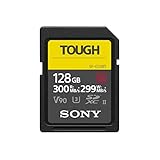
- 2. Sony TOUGH-G series SDXC UHS-II Card 128GB — Best for pros
- 3. SANDISK 128GB Extreme PRO SD Memory Card — Best upgrade
- 4. Lexar 256GB 2000x SD Memory Card — Best warranty
- 5. ProGrade Digital SDXC UHS-II V90 Iridium Memory Card — Best minimal setup
- 6. PNY 128GB EliteX-PRO90 U3 V90 UHS-II SDXC Flash Memory — Best budget pick
- How I screened these six V90 cards
- Capacity: how much footage each card holds
- Is a V90 card overkill for everyday use?
- What the listings don't tell you
- The verdict
- FAQ
The best v90 sd card for everyday use is the SanDisk 512GB Extreme PRO UHS-II V90 SDXC card, because its 512GB capacity means you rarely swap cards mid-shoot and its rated 90 MB/s minimum write clears a camera buffer without stalling. If you shoot outdoors in rough weather, the Sony TOUGH-G 128GB is the safer buy, built with a sealed one-piece body. Pick the wrong card and the real cost shows up on the day it matters: a dropped frame in an 8K clip you can never re-shoot.
Best v90 sd card for everyday use at a glance
| Pick | Capacity | Sustained write | Price |
|---|---|---|---|
Best overall SanDisk 512GB Extreme PRO |
512GB | 90 MB/s min (claim) | Check Price |
Best for pros Sony TOUGH-G 128GB |
128GB | V90 rated | Check Price |
Best upgrade SanDisk 128GB Extreme PRO |
128GB | V90 rated | Check Price |
Best warranty Lexar 256GB 2000x |
256GB | V90 rated | Check Price |
Best minimal setup ProGrade Digital 256GB |
256GB | 90 MB/s min (claim) | Check Price |
Best budget pick PNY 128GB EliteX-PRO90 |
128GB | V90 rated | Check Price |



What does the V90 rating actually promise?
The V90 rating promises one number, and it is the one that matters most for video: a minimum sustained write speed of 90 MB/s. Every card here carries that badge, so on paper they all clear the same bar. What separates them is everything around that floor.
A V90 card is built for high-bitrate video that cannot pause. When a camera records 8K or high-frame-rate 4K, it dumps data continuously, and a card that dips below 90 MB/s drops frames. The V90 label is a floor, not a peak.
The peak numbers you see on the box are different. SanDisk lists a 300 MB/s maximum read on the 512GB Extreme PRO, and Sony lists up to 300 MB/s transfer on the TOUGH-G. Those govern how fast you offload to a computer, not whether a clip records cleanly.
Here is the trick most shoppers miss. For everyday use, the buffer-clearing write matters more than the peak read. A high peak read shortens your editing offload. A stable minimum write is what keeps a recording alive.
- Video Speed Class V90: guarantees 90 MB/s sustained write
- UHS-II: the bus every card here uses, with a second row of pins
- Max read: offload speed, up to 300 MB/s across this set
- Max write: burst-photo speed, from 260 to 299 MB/s claimed here
1. SanDisk 512GB Extreme PRO UHS-II V90 SDXC Memory Card — Best overall
The SanDisk 512GB Extreme PRO is the best v90 sd card for everyday use because its 512GB capacity outlasts every other pick here by a wide margin.
Best for: shooters who want one card to last a whole trip Skip it if: you only fill a card a few times a year
Capacity is what sets this card apart in the group. At 512GB it holds four times what the 128GB picks do, so you swap cards less and offload less often. That single number is why it wins for daily shooting rather than occasional use.
SanDisk lists a maximum read speed of 300 MB/s and a maximum write of 260 MB/s, with a stated 90 MB/s minimum write to hold the V90 floor. The listing describes the card as shockproof, waterproof, X-ray proof and temperature resistant, though these are manufacturer claims rather than figures I can confirm. The card weighs 1.6 oz and ships as a single unit.
The trade-off is the warranty. This is the only pick here backed by just a 1 Year Limited Warranty, while several rivals list lifetime coverage. It also sits at the top of the price ladder, the most expensive pick here. You pay for the gigabytes, not for a longer guarantee.
Pros:
- 512GB, the largest capacity in this set
- 300 MB/s maximum read claimed
- Rated 90 MB/s minimum write for V90
- Described as waterproof and shockproof
Cons:
- Only a 1 Year Limited Warranty
- The most expensive pick here
- Heaviest listed weight at 1.6 oz
- Only one seller lists it
2. Sony TOUGH-G series SDXC UHS-II Card 128GB — Best for pros
The Sony TOUGH-G is the pick for field work because its one-piece sealed body removes the parts that usually break.

Best for: field shooters who need a sealed, unbreakable card Skip it if: you want the most gigabytes for the money
Durability is where this card pulls ahead of the group. Sony's listing describes a world-first one-piece molded construction with bend strength rated 18 times the SD standard, plus a ribless design with no write-protection switch, the two parts most likely to snap. It also lists IPX8 waterproof and IP6X dustproof sealing.
On speed, Sony claims up to 300 MB/s transfer and up to 299 MB/s write, the highest write figure claimed in this set. The card weighs 2 g and measures 0.08 x 1.26 x 0.94 in. It carries a 5-Year Limited warranty, longer than the SanDisk 512GB but shorter than the lifetime picks. Released back in 2019, it is the oldest design here.
The catch is capacity. At 128GB it holds a quarter of what the top pick does, so heavy shooters offload more often. You are buying toughness and write speed, not room to roam.
Pros:
- Sealed one-piece body, no switch to break
- Up to 299 MB/s write claimed, the highest here
- IPX8 waterproof and IP6X dustproof rating
- 5-Year Limited warranty
Cons:
- Only 128GB of capacity
- Oldest design, released in 2019
- Colour not listed
- Only one seller lists it
3. SANDISK 128GB Extreme PRO SD Memory Card — Best upgrade
The 2024 SanDisk 128GB Extreme PRO is the upgrade pick because it pairs fast offload with two years of free recovery software.

Best for: editors who want fast offload plus recovery software Skip it if: you need more than 128GB in one card
This is the newest SanDisk here, released in 2024, and its extra is software. The listing includes RescuePRO Deluxe data recovery free for two full years, which none of the other picks bundle. If you have ever formatted the wrong card, that alone earns it a look.
SanDisk lists up to 300 MB/s write speeds to clear the buffer fast, and up to 300 MB/s transfer to speed editing. The listing cites IP68 water and dust resistance and testing to survive 6-meter drops. It weighs 1.67 g and measures 0.09 x 1.26 x 0.94 in, and it carries a Lifetime Limited Manufacturer warranty, a real step up from the 512GB card's single year.
The limit is capacity. It matches the 128GB picks rather than beating them, so it is a mid-range choice for volume. You get the recovery software and the lifetime cover, but not the room of the top pick.
Pros:
- Free RescuePRO Deluxe for two years
- Lifetime Limited Manufacturer warranty
- Newest design, released in 2024
- IP68 rating and 6-meter drop testing claimed
Cons:
- Only 128GB of capacity
- Sits mid-range on price for a small card
- Recovery software is time-limited
- Only one seller lists it
4. Lexar 256GB 2000x SD Memory Card — Best warranty
The Lexar 256GB 2000x is the pick if you keep gear for years, because it backs a mid-capacity card with a limited lifetime warranty.

Best for: buyers who keep gear for many years Skip it if: you want a rugged, sealed body
Warranty is the reason to choose this one. Lexar lists a limited lifetime warranty, the longest published term in the set, matched only by the two SanDisk small cards. At 256GB it sits in the middle of the capacity range here, twice the 128GB group and half the top pick.
Lexar's listing cites UHS-II with read transfer up to 300 MB/s and support for cinema-quality 8K video. It describes the card as designed for durability and backwards compatible with UHS-I devices, both attributed claims rather than measured figures. It weighs 2 g and measures 0.04 x 1.25 x 0.95 in, and it was released in 2022.
The weak spot is detail. The listing gives no drop rating, no IP sealing figure and no specific minimum write beyond the V90 badge. Compared with the Sony and SanDisk picks, its durability story is thinner. You buy it for the guarantee and the middle-ground capacity, not for a spec sheet full of ruggedness numbers.
Pros:
- Limited lifetime warranty
- 256GB, a middle-ground capacity here
- 300 MB/s read transfer claimed
- Backwards compatible with UHS-I
Cons:
- No published drop or IP rating
- No minimum write figure beyond V90
- Colour is the only cosmetic detail listed
- Only one seller lists it
5. ProGrade Digital SDXC UHS-II V90 Iridium Memory Card — Best minimal setup
The ProGrade Iridium 256GB is the pick for a lean kit, because its listing leans on per-card testing rather than a long feature list.

Best for: cinema shooters who value per-card testing Skip it if: warranty length is your top concern
ProGrade sells this on quality control. The listing states rigorous 100% card testing and serialized tracking of key components, plus firmware described as optimized for cinematic cameras and 4K, 8K and RAW workflows. That testing claim is the differentiator against the rest of the group.
On numbers, ProGrade lists a read speed up to 300 MB/s, write up to 275 MB/s and a minimum sustained write of 90 MB/s, so it states its V90 floor plainly. At 256GB it matches the Lexar for middle-ground room. It weighs 10 g, the second heaviest here, and lists compatibility with Canon, Sony, Nikon, Olympus, Panasonic, Fuji and Samsung.
The trade-off is warranty and price together. ProGrade lists a 3 Year Warranty, longer than the SanDisk 512GB but well short of the lifetime picks, and it sits near the top of the price ladder. You pay a premium for the testing story rather than for coverage.
Pros:
- States 100% card testing before shipping
- 256GB middle-ground capacity
- Publishes a 90 MB/s minimum write figure
- Broad camera-brand compatibility listed
Cons:
- Only a 3 Year Warranty
- Near the top of the price ladder
- No IP or drop rating published
- Only one seller lists it
6. PNY 128GB EliteX-PRO90 U3 V90 UHS-II SDXC Flash Memory — Best budget pick
The PNY EliteX-PRO90 is the budget entry, because it hits the V90 floor at the lowest price position in this set.

Best for: first-time V90 buyers on a tight budget Skip it if: you want a sealed or drop-rated body
Price is the whole case for this card. It is the cheapest of the six, so it is the natural first V90 buy for someone testing whether the format suits them. PNY lists read speeds up to 300 MB/s and write speeds up to 280 MB/s, competitive figures for the price position.
The listing describes the card as ready for 8K video at 7680 x 4320, Class 10 U3 with V90 Video Speed Class, and backwards compatible with UHS-I devices at UHS-I speeds. It carries a Lifetime Limited warranty, which is generous for the cheapest pick. It weighs 14 g, the heaviest listed here, and measures 0.08 x 1.26 x 0.94 in. It was released in 2021.
The limits are capacity and toughness. At 128GB it matches the small group, and the listing gives no drop rating or IP seal. Against the Sony TOUGH-G at a similar low price, PNY trades ruggedness for the lower position. You get the V90 floor and lifetime cover, not a hardened body.
Pros:
- The cheapest of the six
- Lifetime Limited warranty
- 280 MB/s write speed claimed
- Backwards compatible with UHS-I
Cons:
- No drop or IP rating listed
- Only 128GB of capacity
- Heaviest listed weight at 14 g
- Only one seller lists it
How I screened these six V90 cards
I started from the criteria that decide a card for daily shooting, then weighted them. The published specifications did the work, compared side by side, not any hands-on session.
- Sustained write first. Every card had to carry the V90 badge, guaranteeing a 90 MB/s floor. Cards below that were never in contention.
- Capacity second. For everyday use, room to shoot without swapping counts, so the 512GB SanDisk earned an edge over the 128GB group.
- Warranty and durability third. A card lives in the field, so I gave weight to sealed bodies and long coverage, which is why the Sony and Lexar rank where they do.
- Price position last. Once a card cleared the first three, cost separated close calls, lifting the PNY into the budget slot.
Why that order? Because a V90 card that drops frames is useless at any price, and capacity is the thing you notice every single day. Warranty and ruggedness matter, but they are insurance against a rarer event. Price breaks ties rather than making the case. All six cards ship as a single unit, and only one seller lists each, so availability did not separate them.
Capacity: how much footage each card holds
Capacity is the everyday-use lever, and the spread here is wide. Two cards give you 256GB, three give you 128GB, and one gives you 512GB. That single figure shapes how often you stop to swap or offload.
- 512GB: SanDisk Extreme PRO, the only card at this size
- 256GB: Lexar 2000x and ProGrade Iridium
- 128GB: Sony TOUGH-G, SanDisk 128GB, and PNY EliteX-PRO90
The SanDisk 128GB listing gives a useful sense of scale, claiming up to 352 minutes of 4K UHD at 60 fps and up to 286 minutes of 8K at 30 fps on a 512GB card. Scale that down and a 128GB card holds roughly a quarter of that time. For a full day of high-bitrate video, the 512GB pick means one card instead of four.
If you shoot stills or short clips, 128GB is plenty and you save money. If you shoot long-form video or travel without a laptop, the extra room pays for itself in fewer interruptions.
Is a V90 card overkill for everyday use?
Whether a V90 card is overkill for everyday use depends entirely on what your camera writes. This is where the "everyday use" label needs a caveat, because a card cannot promise it fits your routine. Only you can check that.
A V90 card earns its cost when you record high-bitrate 8K or high-frame-rate 4K, formats that need the guaranteed 90 MB/s write to avoid dropped frames. For casual photos, 1080p clips or a phone-style workflow, a slower and cheaper UHS-I card often does the same job.
Before you buy, confirm two things:
- Your camera has UHS-II pins. Every card here uses the UHS-II bus. In a UHS-I slot, the Sony listing notes speeds drop to around 95 MB/s transfer, so you pay for headroom you cannot reach.
- Your recording modes need V90. Check your camera's manual for the write speed its highest bitrate demands.
If both hold true, a V90 card is a fair everyday buy. If not, spend the difference elsewhere.
What the listings don't tell you
The listings publish speed, capacity and warranty. They leave gaps a buyer should know about before committing.
First, minimum write is inconsistently stated. SanDisk and ProGrade publish a 90 MB/s floor outright. The others rely on the V90 badge to imply it. The badge means the same thing, but the missing figure makes direct comparison harder.
Second, durability ratings are uneven. Sony and the SanDisk 128GB cite IP sealing and drop numbers, while Lexar, ProGrade and PNY do not publish any. Absence of a rating is not proof of weakness, but it is a gap you cannot fill from the page.
Third, a card is only as fast as your reader. A 300 MB/s peak read needs a UHS-II card reader to reach. Plug it into an older reader and offload crawls. That accessory is not in any of these listings, so budget for it separately if you want the offload speed you paid for.
The verdict
If you shoot high-bitrate video every day, buy the SanDisk 512GB Extreme PRO. Its 512GB capacity is four times the 128GB field, and its rated 90 MB/s minimum write holds the V90 floor where it counts. One card lasts a full day of 8K or 4K, and you offload once instead of four times. That is the best v90 sd card for everyday use.
If you work in the field, in weather, or in a bag that takes knocks, buy the Sony TOUGH-G instead. Its sealed one-piece body has no write-protect switch to snap and lists 18-times bend strength, plus IPX8 and IP6X sealing. Its 299 MB/s claimed write is the fastest here. You trade capacity for a card that survives.
The cutoff is your shooting volume against your risk. Above roughly a full day of continuous high-bitrate footage, the 512GB SanDisk saves you swaps. Below that, and in rough conditions, the Sony's toughness and 5-Year warranty win. On a tight budget, the PNY hits the V90 floor for the lowest price and still carries a lifetime warranty.
FAQ
Is a V90 SD card worth the extra money?
A V90 SD card is worth the extra money only if your camera records high-bitrate 8K or high-frame-rate 4K, where the guaranteed 90 MB/s write prevents dropped frames. For stills, 1080p or casual clips, a cheaper UHS-I card does the same job. Check your camera's highest recording mode first, then decide whether the headroom pays off.
Is a V90 card worth it over a V60 card?
Whether a V90 card is worth it over a V60 depends on your bitrate. V90 guarantees a 90 MB/s sustained write, V60 guarantees 60 MB/s. If your camera's top mode writes below 60 MB/s, V60 records cleanly and costs less. If it writes above that floor, only V90 keeps every frame, making the upgrade worthwhile.
What does the V90 rating mean on an SD card?
The V90 rating means an SD card guarantees a minimum sustained write speed of 90 MB/s. That floor is what keeps high-bitrate video recording without dropped frames. It is separate from the peak read speed on the box, which governs how fast you offload files to a computer rather than how cleanly a clip records.
SanDisk 512GB or Sony TOUGH-G, which should I pick?
Choosing SanDisk 512GB or Sony TOUGH-G comes down to capacity versus toughness. The SanDisk holds 512GB, four times the Sony's 128GB, so it lasts far longer between swaps. The Sony has a sealed one-piece body, IPX8 sealing, a 299 MB/s claimed write and a 5-Year warranty. Pick capacity for daily volume, toughness for the field.
What mistake do first-time V90 buyers make?
The mistake first-time V90 buyers make is pairing the card with an old reader. A V90 card lists up to 300 MB/s read, but a non-UHS-II reader caps offload at UHS-I speeds. The same applies to the camera slot. Without UHS-II pins on both sides, you pay for speed the hardware cannot reach.
Start by matching your camera's highest recording mode to the V90 floor, then check that your slot and reader both use UHS-II. Once those line up, the SanDisk 512GB Extreme PRO is the safe default for daily shooting: its capacity means fewer swaps and fewer offloads, and its rated 90 MB/s write holds where high-bitrate video needs it. Buy the largest card your budget allows, because the gigabytes are what you notice every day, not the peak numbers on the box.