Best Pocket Microscopes: Carson Pocket Micro Leads
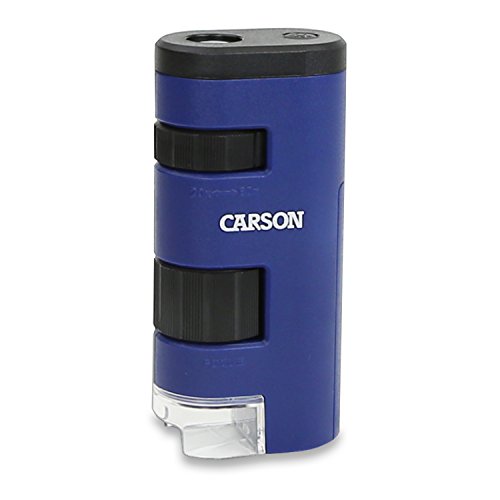
Five pocket microscopes compared on magnification, weight and whether they can record anything at all. The Carson MM-450 leads, but the answer changes fast if you need to save what you see.

By Sam BaileyUpdated 15 min read
On this page
- Best pocket microscope for product photography at a glance
- How I screened these five down
- Can a pocket microscope actually feed a camera?
- 1. Carson Pocket Micro 20x-60x LED Pocket Microscope Handheld — Best overall
- 2. BMDSAE 1000X Handheld Digital Microscope for Kids: Pocket — Best premium
- 3. Carson MicroBrite Plus 60x-120x LED Lighted Pocket — Runner-up
- 4. SE LED-Illuminated Pocket Microscope — Best for beginners
- 5. FTVOGUE 60X Pocket Microscope Portable Mini Microscope — Best budget pick
- Magnification is the number that misleads
- What more money buys across these five
- What the listings do not tell you
- The verdict
- FAQ
The best pocket microscope for product photography is the Carson Pocket Micro MM-450, a 2.12 oz handheld running 20x to 60x with a one-year limited warranty. If you need the device to actually save a file rather than just show you a view, the BMDSAE 382 with its 2.0-inch IPS screen and 32MB of onboard storage is the one to buy instead. Price tiers here split cleanly: the entry picks give you a lens and a light, the middle gives you a warranty and a tighter body, and the top of the range buys a sensor and a screen.
Best pocket microscope for product photography at a glance
| Pick | Magnification | Weight | Price |
|---|---|---|---|
| 20x–60x | 2.12 oz | Check Price | |
| 1000x claim | 7.76 oz | Check Price | |
| 60x–120x | 2.08 oz | Check Price | |
Best for beginners SE LED-Illuminated Pocket Microscope |
30x | not listed 1.6 oz claim |
Check Price |
Best budget pick FTVOGUE 60X Pocket Microscope Portable Mini Microscope |
60x | 1.06 oz | Check Price |


How I screened these five down
I started with the published specifications and threw out everything I could not compare. Magnification range, weight, physical dimensions, warranty and whether the device has any way to record an image. Those five columns decided the order.
Four of the five picks are pure optical scopes. You put your eye to them. One, the BMDSAE 382, has a screen and a 2MP sensor. That single difference splits this set more sharply than any magnification figure does, which is why it shapes the whole ranking.
Weight got heavy priority because these are handheld. The spread here is wide:
- FTVOGUE 60X: 1.06 oz
- Carson MicroBrite Plus: 2.08 oz
- Carson Pocket Micro: 2.12 oz
- BMDSAE 382: 7.76 oz
That last figure is more than seven times the lightest. Warranty was the tiebreaker among the optical picks. Three of the five publish one. The MicroBrite Plus states a limited lifetime warranty, the Pocket Micro one year limited, the BMDSAE one year. The SE and the FTVOGUE list none, and that pushed both down.
I also weighed published-detail completeness. The FTVOGUE lists a colour, a count, a weight and a model number, and nothing else. No dimensions. That is thin, and it costs it a place.
Can a pocket microscope actually feed a camera?
Here's the honest answer, and it matters before you spend anything. Amazon's results for the best pocket microscope for product photography do not filter for camera compatibility, and none of these five listings claims a tripod thread, a C-mount, an eyepiece adapter or a way to attach to a DSLR or phone lens. So treat the photography angle as something you have to solve yourself.
There are two workable routes.
- Use the scope as an inspection tool. You look through it, find the flaw or the texture you want to feature, then shoot that area with your normal macro setup. Four of these picks work this way, and it's the reason weight and eye comfort matter so much.
- Use a device that records natively. The BMDSAE 382 lists a 2MP sensor, a 2.0-inch IPS screen and 32MB storage for what the maker describes as 200-plus photos or AVI video. That is a file you can pull off, not a view you have to re-shoot.
Neither route makes any of these a studio instrument. If your shoot demands controlled, repeatable framing on a copy stand, a pocket scope is the wrong tool and no listing here says otherwise. What a pocket scope does well is tell you what a surface actually looks like at 60x before you commit to a lighting setup.
1. Carson Pocket Micro 20x-60x LED Pocket Microscope Handheld — Best overall
The Pocket Micro hits the sweet spot for close-up inspection work: a usable 20x to 60x range, a genuinely pocketable 3.9 x 1.9 x 1.1 in body, and a published warranty behind it.
Best for: close-up hobbyists who want a light, warranted scope for inspecting subjects before a shoot Skip it if: you need the scope itself to record the image
The 20x low end is what separates this from the other Carson. At 20x you can actually find your subject. Once you're past 60x, hunting for a target with a handheld device gets frustrating fast, and this one starts wide enough to hunt comfortably before you zoom.
It weighs 2.12 oz and measures 3.9 x 1.9 x 1.1 in, so it disappears into a jacket pocket next to a spare battery. Carson lists a built-in LED and says the lighting matters most in low-light conditions, which is exactly the situation you hit when a scope's own body shades the subject.
Carson publishes a one-year limited warranty and a 2017 release date, and it's the one buyers choose most often in this set by a wide margin. Only one seller lists it, so there's no marketplace shopping around.
The trade-off is what it can't do. There's no screen, no sensor, no storage. It's the third-cheapest of the five and sits at the top of the price range for optical-only picks, so you're paying for range and build rather than capture. If your workflow needs a file, look further down.
Pros:
- 20x start makes finding a subject easy
- Just 2.12 oz and 3.9 in long
- One-year limited warranty published
- Only optical pick with a full dimension spec
- The scope buyers here pick most often
Cons:
- No sensor, screen or storage of any kind
- No published tripod or adapter mount
- Priced above the other optical picks in this set
- Single seller listing, no alternative offers
2. BMDSAE 1000X Handheld Digital Microscope for Kids: Pocket — Best premium
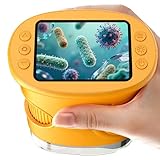
The only pick here that produces a file instead of a view, thanks to a 2.0-inch IPS screen, a 2MP sensor and 32MB of onboard storage.

Best for: anyone who needs a file, not just a view, straight out of the device Skip it if: pocketability matters more than capture
If you searched for the best pocket microscope for product photography because you want images, not observations, this is the one that answers the brief. BMDSAE lists a 2MP sensor, a 2.0-inch IPS screen, manual focus and 32MB of storage, which the maker puts at 200-plus photos or AVI video clips.
The lighting spec is the other standout. An 8-LED array with three brightness modes, off, medium and high, gives you more control over shadow than a single fixed LED does. On reflective subjects like coins or circuitry, being able to drop to medium is the difference between a readable surface and a blown highlight.
Then the weight. It's 7.76 oz, which is more than seven times the FTVOGUE and nearly four times either Carson. It's the heaviest thing here by a long way and the word "pocket" is doing some work. BMDSAE publishes a one-year warranty and lists CE, FCC and CPC certification for the ABS plastic body.
Note what the 1000x figure means: the maker describes it as optical plus digital combined. Digital magnification is cropping, so treat that number as a ceiling, not a resolving power. It's also the most expensive pick here.
Pros:
- Only pick with a screen and image storage
- 8 LEDs with three brightness settings
- 2MP sensor and manual focus control
- One-year warranty and CE/FCC/CPC certification listed
Cons:
- 7.76 oz, the heaviest of the five by far
- 1000x figure combines optical and digital
- 32MB storage fills quickly with video
- No published dimensions to judge bulk
- Most expensive pick in this set
3. Carson MicroBrite Plus 60x-120x LED Lighted Pocket — Runner-up
Doubles the top-end magnification of the Pocket Micro to 120x and backs it with the longest warranty in this comparison.

Best for: detail hunters pushing past 60x who want the longest warranty here Skip it if: you struggle to hold a shaky 120x view steady
This is the reach pick. The 60x to 120x range is the highest genuine optical figure of the five, and Carson describes it as lab tested for accurate magnification at 120x optical zoom. That's a manufacturer claim, but it's a specific one about optics rather than a marketing flourish.
The warranty is the real headline. A limited lifetime warranty is stronger than anything else in this comparison, and it's the only lifetime coverage among all five. Carson lists a 2020 release, three years newer than the Pocket Micro, at 2.08 oz and 3.7 x 2.3 x 1.2 in. It's a hair lighter and marginally shorter than the MM-450 but slightly wider.
Here's the trick with high magnification handheld: your field of view shrinks as the power climbs. Starting at 60x means the widest view you get is the narrowest view the Pocket Micro offers. Every subject hunt begins tight. For flat, static subjects on a bench that's fine. For anything you're chasing across a surface, it's work.
It's also the slowest-moving pick of the five here, well behind both the Pocket Micro and the BMDSAE, and its listing publishes no price position at all.
Pros:
- Limited lifetime warranty, the longest here
- 120x is the top optical figure in this set
- 2.08 oz, lightest of the two Carsons
- 2020 release, newest of the optical picks
Cons:
- 60x floor makes finding subjects harder
- No capture, screen or storage
- Widest body of the two Carsons at 2.3 in
- Slowest-selling pick in this comparison
4. SE LED-Illuminated Pocket Microscope — Best for beginners
A single-power 30x scope with a focus wheel and a separate flashlight mode, which makes it the most forgiving pick here for a first-time user.

Best for: first-timers who want a wide, forgiving view and a flashlight mode Skip it if: 30x is not enough magnification for your subject
Low magnification is an advantage more often than people expect. At 30x the field of view is the widest of the five, which means you point the scope at a surface and immediately see something recognisable. No hunting, no wobble, no repeated re-aiming. That is why this is the pick for someone who has never used a pocket scope.
SE lists a focus wheel for precise adjustment, an adjustable LED, and a dual-mode design that works as a plain flashlight as well as a microscope. A fitted vinyl storage pouch is included. The listing gives dimensions of 1.25 x 7.5 x 2.25 in, which reads long for a pocket device, and separately claims roughly 1.6 ounces in the feature copy. There's no weight in the specification list to confirm it.
It's the second-cheapest of the five and sits in the lower tier on price, so a beginner isn't overcommitting. Interestingly, it's the only pick here filed under camera and photo rather than microscopes or optics.
The gaps are real. No published warranty, no listed colour beyond black, no capture. And 30x is a third of what the MicroBrite Plus reaches.
Pros:
- Widest field of view at 30x
- Focus wheel for fine adjustment
- Doubles as a flashlight
- Fitted vinyl storage pouch included
- Second-cheapest pick here
Cons:
- No published warranty at all
- 30x is the lowest magnification in this set
- Weight appears only as a marketing claim
- 7.5 in listed length is long for a pocket
5. FTVOGUE 60X Pocket Microscope Portable Mini Microscope — Best budget pick
At 1.06 oz it's the lightest pick by a clear margin, with dual top-and-bottom LEDs that few pocket scopes offer at the cheapest price position here.

Best for: jewellery and stamp inspection on a tight budget Skip it if: you want a published warranty or a stated dimension
Two things make this worth a look. It's the cheapest of the five, and it's 1.06 oz, roughly half the weight of either Carson. That's genuinely useful if it's living in a shirt pocket all day.
The dual LED arrangement is the more interesting feature. FTVOGUE describes top and bottom adjustable LEDs to eliminate shadow, letting you light opaque objects from above and translucent ones like leaves or fabric from below. None of the other four picks lists bottom illumination. For photographers assessing translucent packaging or fabric weave, that transmitted-light option is a real capability the others don't claim.
It's filed under jewellery loupes rather than microscopes, and the feature copy leans that way: stamps, insects, circuitry. A thumb-activated swivel switch handles the light, and a PU leather pouch is included.
Now the problems. The listing publishes no dimensions, so you can't tell how it sits in a hand. No warranty is stated, the only pick besides the SE with that gap. The model number is a random string. And there's an internal contradiction worth flagging: the specification says 1.06 oz while the feature copy says 3.2 oz. It's also the slowest-moving pick here alongside the SE.
Pros:
- 1.06 oz, the lightest of the five
- Cheapest pick in this comparison
- Only pick claiming bottom-side LED illumination
- PU leather storage pouch included
Cons:
- No published dimensions whatsoever
- No stated warranty
- Weight figures contradict each other in the listing
- Fixed 60x with no lower range
Magnification is the number that misleads
Most guides to the best pocket microscope for product photography rank by magnification and stop there. 1000x beats 120x beats 60x beats 30x. Clean, obvious, wrong.
Two things break that logic.
First, digital magnification isn't optical. The BMDSAE listing describes its 1000x as optical plus digital combined. Digital magnification enlarges pixels you already captured, so it adds no detail. The highest genuine optical figure in this set is the MicroBrite Plus at 120x.
Second, and this is the one people learn the hard way, magnification and field of view move in opposite directions. Higher power means a smaller patch of surface visible and a shakier image in a handheld device. At 120x, a millimetre of hand tremor throws your subject out of frame entirely.
So what actually decides it? Three things, in order:
- Whether the device can record. A view you can't save is a view you have to reproduce with another camera.
- The bottom of the magnification range, not the top. 20x to 60x is more usable than 60x to 120x for most surfaces.
- Weight, because you hold it. The spread runs from 1.06 oz to 7.76 oz across these five.
Pick the lowest magnification that shows you what you need. It'll be steadier, brighter and easier to aim every time.
What more money buys across these five
The price tiers here map onto capability more cleanly than in most gear categories.
The lower tier gets you a lens and a light. The FTVOGUE, cheapest of the five at 1.06 oz, and the SE, second-cheapest with its focus wheel and flashlight mode. Neither publishes a warranty. Neither lists a complete specification set. What you're buying is optics and illumination.
The middle is where the warranties appear. The Carson Pocket Micro sits third on price and adds a one-year limited warranty, a full 3.9 x 1.9 x 1.1 in dimension spec and a 20x to 60x range. The MicroBrite Plus doesn't publish a price position, but its limited lifetime warranty is the strongest coverage in the set.
The top buys a sensor. The BMDSAE 382 is the most expensive pick and the only one with a 2MP camera, a 2.0-inch IPS screen, 32MB storage and 8 adjustable LEDs. You pay for it in weight: 7.76 oz.
The pattern is worth naming. Money doesn't buy you more magnification in this set, since the cheapest pick reaches 60x. It buys you documentation, warranty coverage and the ability to keep what you saw.
What the listings do not tell you
Four gaps run across these five listings, and none of them is trivial for a photographer.
Working distance. Not one listing states how far the lens sits from the subject at focus. That distance determines whether you can slide a light in beside the scope or whether the body itself blocks it. It's the single most useful number for photography work and nobody publishes it.
Battery type and life. Every pick has an LED. Only the BMDSAE names a power source, a 600mAh battery. The rest leave you guessing whether you're feeding button cells, AAAs, or a USB port.
Mounting. No listing claims a tripod thread or an adapter. So any repeatable setup is something you'll be improvising.
Field of view. Magnification is published, field of view never is. Two 60x scopes with different eyepieces show very different amounts of surface.
Two picks have specific holes worth knowing. The SE publishes no weight in its specification list, only a marketing claim of roughly 1.6 ounces. The FTVOGUE publishes no dimensions at all, and its listed 1.06 oz contradicts a 3.2 oz figure in its own feature copy. When a listing disagrees with itself on a basic number, assume the rest of its figures deserve the same scepticism.
The verdict
Sort this set by price tier and the choice makes itself.
At the lower end, the FTVOGUE 60X is the pick if weight is everything. It's 1.06 oz, the cheapest here, and the only one claiming bottom-side LED illumination for translucent subjects. Accept no warranty and no published dimensions. The SE MW10084 is the better lower-tier buy for a first-timer, because 30x gives you the widest, steadiest view in the set plus a focus wheel and flashlight mode.
In the middle, the Carson Pocket Micro MM-450 wins outright and takes the overall nod. Its 20x floor is the most usable starting magnification here, the 2.12 oz body at 3.9 x 1.9 x 1.1 in genuinely pockets, and it carries a one-year limited warranty with complete published specifications. If you'd rather have coverage than range, the MicroBrite Plus offers a limited lifetime warranty and reaches 120x optical, the highest true figure in this comparison.
At the top, the BMDSAE 382 is the only device that records. A 2MP sensor, 2.0-inch IPS screen, 32MB storage and 8 adjustable LEDs make it the answer if you need files rather than glances. The cost is 7.76 oz, seven times the lightest pick.
The cutoff is simple: if you need an image file, go premium. If you need a fast look at a surface, go Carson MM-450.
FAQ
Is a pocket microscope worth buying for photography work?
A pocket microscope is worth buying if you use it to inspect rather than shoot. None of these five publishes a tripod mount or camera adapter, so treat it as a scouting tool that tells you what a surface looks like at 60x before you set up lights. Only the BMDSAE 382, with its 2MP sensor and 2.0-inch screen, produces a saveable file on its own.
Which pocket microscope gives the best value for the money?
The best value here is the SE MW10084. It's the second-cheapest of the five and still includes a focus wheel, adjustable LED, dual flashlight-and-microscope modes and a fitted vinyl pouch. Its 30x power sounds modest, but the wide field of view makes it far easier to aim than a 120x scope. The absent warranty is the trade-off you accept.
How much magnification do I actually need?
The magnification you actually need is usually lower than you'd guess. Field of view shrinks and hand shake amplifies as power climbs, so 30x or 60x handles most surfaces, fabric weave, print texture and solder joints comfortably. The Carson MM-450's 20x floor is the most forgiving starting point across these five. Reserve 120x for flat, static subjects braced on a bench.
Carson Pocket Micro or MicroBrite Plus: which should I choose?
Choose the Pocket Micro for usability and the MicroBrite Plus for reach and coverage. The MM-450 starts at 20x, making subjects easy to find, and weighs 2.12 oz at 3.9 x 1.9 x 1.1 in with a one-year limited warranty. The MM-300 hits 120x optical and carries a limited lifetime warranty, but its 60x floor means every view starts tight.
What is the biggest mistake buyers make with the best pocket microscope for product photography?
The biggest mistake is chasing the highest advertised magnification figure. The BMDSAE's 1000x combines optical and digital, and digital magnification just enlarges existing pixels without adding detail. Buyers also overlook working distance, which no listing here publishes, even though it determines whether you can fit a light beside the scope. Check the low end of the range first.
Start by deciding whether you need to keep the image or just see it. That one question routes you to the BMDSAE 382 with its screen and 32MB storage, or to everything else. For most photographers scouting a surface before a shoot, keeping isn't the point, and the Carson Pocket Micro MM-450 handles the looking better than anything else here: a 20x floor that lets you find your subject fast, 2.12 oz that never weighs down a pocket, and a warranty behind it. Buy the scope you'll actually carry.