Best Weather Sealed Zoom Lens: OM System Wins

A ranked shortlist of six weather sealed zoom lenses, with the deciding trade-off between reach, weight and sealing spelled out for each pick.

By Sam BaileyUpdated 15 min read
On this page
- Best weather sealed zoom camera lens at a glance
- How I screened these six weather sealed zooms
- 1. OM System M.Zuiko ED 40-150mm F4 PRO — Best overall
- 2. Canon RF100-500mm F4.5-7.1 L IS USM — Best premium
- 3. Sony FE 200-600mm f/5.6-6.3 G OSS — Best upgrade
- 4. OM System M.Zuiko ED 12-45mm F4 PRO — Best warranty
- 5. Canon EF 70-200mm f/4 L IS USM (Renewed) — Best minimal setup
- 6. Panasonic LUMIX G 100-300mm II (Renewed) — Best budget pick
- What weather sealing actually means on a lens spec sheet
- How much reach do you really need?
- Full-frame or Micro Four Thirds for wet weather?
- Renewed lenses: worth the shorter warranty?
- The verdict
- FAQ
The best weather sealed zoom camera lens for most shooters is the OM System M.Zuiko ED 40-150mm F4.0 PRO, which pairs a full weather sealed design and fluorine coating with a body that weighs just 0.84 lb. If you shoot Canon RF and need real reach for wildlife, the Canon RF100-500mm F4.5-7.1 L IS USM is the alternate pick, trading portability for a 500mm long end and up to 5 stops of stabilisation.
Most guides to a best weather sealed zoom camera lens compare focal ranges first, then quietly ignore whether the sealing extends past the mount ring. That is the wrong order. A 600mm lens without a sealed switch panel is a fair-weather lens with a long reach. Focal length decides what you can frame; sealing decides whether you can still be outside when the frame gets interesting.
Best weather sealed zoom camera lens at a glance
| Pick | Focal range | Weight | Price |
|---|---|---|---|
Best overall OM System M.Zuiko 40-150mm F4 PRO |
40-150mm (80-300mm equiv.) |
0.84 lb | Check Price |
Best premium Canon RF100-500mm F4.5-7.1 L IS USM |
100-500mm | 3 lb | Check Price |
Best upgrade Sony FE 200-600mm f/5.6-6.3 G OSS |
200-600mm | Not listed | Check Price |
Best warranty OM System M.Zuiko 12-45mm F4 PRO |
12-45mm (24-90mm equiv.) |
1 lb | Check Price |
Best minimal setup Canon EF 70-200mm f/4 L IS USM (Renewed) |
70-200mm | 2.55 lb | Check Price |
Best budget pick Panasonic LUMIX G 100-300mm II (Renewed) |
100-300mm (200-600mm equiv.) |
1.27 lb | Check Price |



How I screened these six weather sealed zooms
I started with what the listings actually claim. Every product in this set has weather sealing or splash and dust resistance in either the title or the feature bullets. That is the entry ticket. Any zoom without a stated sealing claim was cut before this list existed.
From there, I lined up the published specifications side by side: focal range, weight, dimensions, warranty term, release year and price position within this set. I then read each manufacturer's feature bullets for extra sealing detail, image stabilisation figures, and coating claims like fluorine on the front element.
Three things got picks cut from earlier drafts:
- Sealing claims that only appear in third-party marketing copy, not the Amazon listing itself.
- Duplicate focal ranges from the same brand, where I kept only the more current release.
- Missing weight or dimensions, which makes the "compact" claim untestable from the data.
The six that survived cover four mounts and four different jobs, from a small standard zoom for travel to a 600mm super-tele for birds. If your body is Canon RF, Sony E, Micro Four Thirds or Canon EF, one of these fits.
1. OM System M.Zuiko ED 40-150mm F4 PRO — Best overall
A weather sealed telephoto zoom that weighs less than a can of soup, on a mount that halves the size of every focal length.
Best for: Micro Four Thirds shooters who hike in changeable weather Skip it if: you need reach past 300mm equivalent
Released in 2022, this 40-150mm F4 PRO covers an 80-300mm equivalent range on Micro Four Thirds and does it at 0.84 lb. That is lighter than every other telephoto in this set by a comfortable margin: the Canon RF100-500mm is over three and a half times heavier at 3 lb, and even the older EF 70-200mm f/4 comes in at 2.55 lb. The body measures 2.76 x 3.91 x 2.71 in, small enough to leave clipped to a chest harness on a long day.
OM System states a weather sealed design and a fluorine coating on the front element, which sheds water spots between wipes. Backing that up is a 1 Year Manufacturer warranty. The trade-off is real: at 300mm equivalent you stop short of true wildlife reach, and the Micro Four Thirds sensor gives up some noise performance at higher ISOs against full-frame rivals like the Canon RF and Sony picks below.
Pros:
- Lightest telephoto zoom here at 0.84 lb
- Weather sealed design with fluorine front coating
- 80-300mm equivalent covers most travel telephoto needs
- Constant F4 aperture across the range
- Full 1 Year Manufacturer warranty
Cons:
- Tops out at 300mm equivalent
- Micro Four Thirds sensor size limits low-light headroom
- Only two sellers list it
2. Canon RF100-500mm F4.5-7.1 L IS USM — Best premium
A super-telephoto L-series zoom for the RF mount, with the reach the winner does not have.

Best for: Canon RF wildlife and sports shooters who need range Skip it if: you carry gear on long hikes and count grams
This is the most expensive pick here, and the reason is on the barrel: a 500mm long end paired with L-series build. Canon calls it a high performance L-series super-telephoto zoom, and lists Optical Image Stabilization with up to 5 stops of shake correction across three modes, including a panning mode for tracking moving subjects and an during-exposure-only mode. Autofocus is driven by Dual Nano USM, which Canon describes as high speed, smooth and quiet.
The minimum focusing distance is 3.0 ft (0.9 m), a useful figure for a lens of this length when you want a big flower shot without switching bodies. Weight is 3 lb and the box measures 9.1 x 9.1 x 9.1 in. That is where the trade-off lives. This lens is heavier than any other pick in the set, and the variable f/4.5-7.1 aperture goes narrow at 500mm, which hurts in dim woodland. Warranty is 1 year manufacturer, matching the two OM System picks.
Pros:
- 100-500mm covers wide wildlife range on RF bodies
- Up to 5 stops of image stabilisation claimed
- Three stabilisation modes including panning
- Dual Nano USM autofocus system
- L-series weather resistant build
Cons:
- The heaviest lens in this set at 3 lb
- Variable aperture narrows to f/7.1 at the long end
- The most expensive pick here
3. Sony FE 200-600mm f/5.6-6.3 G OSS — Best upgrade
Sony's long telephoto for full-frame E-mount, sold here as a kit with a variable ND filter and cleaning accessories.

Best for: Sony E-mount shooters chasing distant birds and aircraft Skip it if: you want a lens that fits in a normal daypack
If you shoot a Sony full-frame body and 500mm is not enough, this is the pick. Sony lists an E-Mount full-frame format lens with an aperture range of f/5.6 to f/36, five ED elements and one aspherical element, plus Nano AR and fluorine coatings. Autofocus uses a Direct Drive Super Sonic Wave motor, with Optical SteadyShot handling stabilisation. The bundle also adds a variable neutral density filter, an air blower, a UV cap keeper and a maintenance kit.
Sony describes a dust and moisture-resistant construction, which puts it firmly in the sealed zoom category. Minimum focusing distance is 7.9 ft, and the diaphragm is a rounded 11-blade design. This is the only pick in the set to reach 600mm natively without a crop factor, which for aviation and shorebird work is the difference between a keeper and a crop.
The listing does not publish weight or dimensions in the specification table, which means the "big lens, plan for it" note has to come from focal length rather than a figure. Treat that as an unknown you will confirm before you buy.
Pros:
- 200-600mm native range on full-frame
- Dust and moisture-resistant construction
- Direct Drive SSM autofocus and Optical SteadyShot
- Ships as a kit with variable ND filter and cleaning gear
- Nano AR and fluorine coatings claimed
Cons:
- Weight and dimensions not listed on the product page
- Premium price position in this set
- Kit accessories are third-party, not Sony branded
4. OM System M.Zuiko ED 12-45mm F4 PRO — Best warranty
The wide-to-normal PRO zoom that OM System calls the world's smallest and lightest in its class.

Best for: travel and street shooters who want one small standard zoom Skip it if: you need telephoto reach
This one is not a telephoto, and it is on the list on purpose. A weather sealed kit is only as sealed as its shortest lens. If your telephoto is the OM System 40-150mm and your standard zoom is a bare consumer glass with no sealing, the wet-weather shoot ends the moment you swap. Released in 2024, the 12-45mm F4 PRO covers 24-90mm equivalent, weighs 1 lb, and measures 2.5 x 2.76 x 2.5 in.
OM System describes compact, lightweight dust and splashproof construction, high-speed focusing, an L-Fn button and close-up capability. It also claims focus stacking when paired with a compatible camera body, which matters for macro-adjacent work in the field. The listing calls it the world's smallest and most lightweight model in its class, a manufacturer claim you should read as a claim rather than a measurement.
Warranty is 1 Year Manufacturer Warranty, matching the top pick. The trade-off against the 40-150mm is straightforward: you get more of the frame, none of the reach, and the same sealing standard for your kit's short end.
Pros:
- Compact 1 lb body with dust and splashproof build
- 24-90mm equivalent covers most everyday framing
- Constant F4 aperture across the range
- Close-up capability with focus stacking support claimed
- 1 Year Manufacturer Warranty
Cons:
- No telephoto reach
- Second-cheapest here but still not a bargain
- Only one seller lists it
5. Canon EF 70-200mm f/4 L IS USM (Renewed) — Best minimal setup
A renewed L-series 70-200mm f/4 for anyone still shooting Canon EF DSLRs.

Best for: Canon EF DSLR owners rebuilding a light kit on a budget Skip it if: you shoot mirrorless and do not own an EF body
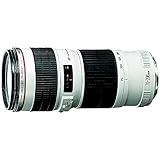
If your camera body still has an EF mount, the RF picks are not options and the Sony pick certainly isn't. This 70-200mm f/4 L IS USM keeps a DSLR kit alive with a proper L-series telephoto. Canon lists water- and dust-proof construction, an Image Stabilizer providing up to 4 stops of shake correction, and a ring-type ultra-sonic motor for fast, quiet autofocusing. Fluorite UD lens elements are called out for resolution and contrast, with a closest focusing distance of 3.94 feet.
Weight is 2.55 lb and the body measures 2.99 x 6.77 x 2.99 in. This is a Renewed listing, which is the honest catch: warranty is 90 days limited, not the 1 year the two OM System picks and the Canon RF carry. You are trading a warranty term for a much lower buy-in on a lens that would otherwise sit near the middle of this set on price. The constant f/4 aperture is a genuine feature for anyone who has been fighting f/5.6-6.3 zooms in low light.
Pros:
- Constant f/4 aperture across 70-200mm
- Water and dust-proof L-series construction
- Up to 4 stops of image stabilisation claimed
- Ring-type USM autofocus
- Sells faster than the other renewed pick here
Cons:
- 90 day limited warranty on this Renewed listing
- EF mount only, no native RF support
- Older stabilisation figure than newer L glass
6. Panasonic LUMIX G 100-300mm II (Renewed) — Best budget pick
The cheapest way into a weather sealed super-telephoto reach on Micro Four Thirds.

Best for: Panasonic and Olympus shooters who want cheap reach Skip it if: you want a full manufacturer warranty
This is the cheapest pick of the six, and on Micro Four Thirds it delivers a 200-600mm equivalent range from a body that weighs 1.27 lb. That is the same reach as the Sony FE 200-600mm from a lens that is a fraction of the buy-in. Panasonic lists upgraded support for harsh weather conditions with splash proof and dustproof construction, an aperture of f/4.0-5.6 across the range, a closest focusing distance of 1.5m (4.92 feet), and Power O.I.S. compatible with LUMIX Dual I.S. 2.0 on Panasonic mirrorless bodies.
There are two catches. First, this is a Renewed listing, and the warranty is 90 days limited. Second, an f/4.0-5.6 aperture on a small sensor asks a lot of your ISO in poor light, which is exactly when weather sealing matters. On price, it is the entry into this category. On support, you are on your own after three months.
Pros:
- The cheapest of the six picks
- 200-600mm equivalent reach on Micro Four Thirds
- Splash proof and dustproof construction claimed
- Power O.I.S. with Dual I.S. 2.0 compatibility
- 1.27 lb body keeps a super-tele kit light
Cons:
- 90 days limited warranty on this Renewed listing
- Variable f/4.0-5.6 aperture across the range
- Slowest seller of the two renewed picks here
What weather sealing actually means on a lens spec sheet
Manufacturers use several phrases for sealing, and they are not all the same claim. Reading the listing carefully is worth ten minutes on a lens you plan to own for years.
- Weather sealed design. OM System uses this on both PRO lenses. It generally implies gaskets around the mount, rings and switches, but no ingress rating figure.
- Dust and splashproof construction. OM System's alternative wording on the 12-45mm and Panasonic's wording on the 100-300mm II. Aimed at rain and blowing dust, not immersion.
- Dust and moisture-resistant construction. Sony's wording on the 200-600mm. Similar intent, different marketing team.
- Water- and dust-proof construction. Canon's wording on the EF 70-200mm f/4. The strongest sounding phrase in this set, but again without a published ingress rating.
Fluorine coatings on the front element, which the OM System 40-150mm and Sony 200-600mm both list, are a separate feature. They shed water and oils, which keeps the front glass clean between wipes. That is a sealing-adjacent benefit, not a sealing claim.
The upshot: assume every lens here can handle a shower and blown grit at a beach. Do not assume any of them can be dunked. And the body matters as much as the glass: a sealed lens on a non-sealed body is a puddle in a suit.
How much reach do you really need?
Focal length is where most buyers overspend. Here is a rough map of the six picks by what the reach is actually for, using 35mm equivalents so the crop-sensor picks are comparable:
- 24-90mm equivalent (OM System 12-45mm F4 PRO). Streets, interiors, landscapes, group shots and most travel work.
- 70-200mm (Canon EF 70-200mm f/4). Portraits, events, sports at moderate distance, compressed landscape frames.
- 80-300mm equivalent (OM System 40-150mm F4 PRO). All of the above plus small wildlife, air shows at closer range, and stage work from a middle row.
- 100-500mm (Canon RF100-500mm). Serious wildlife, birds, motorsport, aviation.
- 200-600mm (Sony FE 200-600mm and Panasonic 100-300mm II in equivalent terms). Distant birds, shy mammals, the moon.
If you have never shot past 300mm, be honest before you buy 600mm. Longer glass magnifies every technique problem: shake, missed focus, air haze, subject movement. The trick is to buy the shortest lens that reliably fills the frame with what you photograph, and to buy the sealing that lets you keep shooting when the sky changes.
Full-frame or Micro Four Thirds for wet weather?
Three of these picks are Micro Four Thirds and three are for larger sensors. That split matters for wet-weather shooting for reasons beyond sealing.
The Micro Four Thirds picks (both OM System PRO zooms and the Panasonic super-tele) are the lightest in each of their focal categories. The 40-150mm F4 PRO weighs 0.84 lb; the nearest full-frame telephoto here, the EF 70-200mm f/4, weighs 2.55 lb. In practice, that means a Micro Four Thirds sealed kit fits in a smaller waterproof bag and does not need a rain cover with a giant sleeve.
The Canon RF and Sony picks give you sensor area and low-light headroom that the smaller sensor cannot match. If you shoot at dusk, in dense forest, or under heavy cloud, full-frame will hold cleaner files at the ISOs weather sealing exists to let you shoot at.
Weather sealed is not a substitute for a sensor that can see in the dark. Neither is a big sensor a substitute for gaskets. Match the pick to whichever one you fight more often.
Renewed lenses: worth the shorter warranty?
Two picks here are Renewed listings: the Canon EF 70-200mm f/4 and the Panasonic 100-300mm II. Both carry a 90 days limited warranty rather than the 1 year term on the four new lenses.
That is a real cost, not a footnote. On a lens with moving elements, image stabilisation and electronic contacts, the failure window that matters is often longer than 90 days. If you buy either of these picks, plan to test it hard in the first two months: fire long bursts, use it in the rain the listing says it can survive, check focus at both ends of the zoom, and swap it if anything feels off. After the window closes, repairs are on you.
The upside is straightforward. Renewed pricing is what makes an L-series sealed telephoto or a 600mm equivalent reach possible for a buyer who could not otherwise stretch to either. If you accept the shorter warranty as the price of admission, both picks earn their place in this list. If a 1 year term is a hard requirement, the four new lenses are your set.
The verdict
If you shoot Micro Four Thirds, or you are open to switching, the OM System M.Zuiko ED 40-150mm F4 PRO is the best weather sealed zoom camera lens in this set. At 0.84 lb it is the lightest telephoto here by a clear margin, the sealing and fluorine coating are stated in the listing, and the 80-300mm equivalent range covers most of what a travelling photographer will point a telephoto at. A 1 Year Manufacturer warranty and a 2022 release date round it out.
If you shoot Canon RF and reach is what you buy a telephoto for, the Canon RF100-500mm F4.5-7.1 L IS USM is the pick instead. You give up 2 lb of weight and pay the top price in this set. You get 200mm more at the long end, up to 5 stops of stabilisation across three modes, and Dual Nano USM autofocus.
The cutoff is 400mm equivalent. Below it, the OM System's weight and size win. Above it, the Canon RF's native full-frame reach and low-light headroom are worth the load. Sony shooters who need more than 500mm go straight to the FE 200-600mm.
FAQ
What does weather sealed mean on a zoom lens?
Weather sealed on a zoom lens usually means gaskets around the lens mount, focus and zoom rings, and any external switches, keeping out rain and dust. None of the six listings here publish an ingress rating figure. Canon uses "water- and dust-proof", Sony uses "dust and moisture-resistant", OM System and Panasonic use "splashproof" or "weather sealed design". Treat all four as rain-tolerant, not submersible.
Is a weather sealed zoom worth it for casual shooters?
A weather sealed zoom is worth it the first time weather changes while you are outside with a camera. Casual shooters who only photograph indoors or in fair weather rarely benefit. If you hike, travel, shoot events outdoors or photograph coastlines, the sealing pays for itself the first afternoon a shower rolls through. Match the sealed lens to a sealed body, or the gaskets do nothing.
How much does the OM System 40-150mm F4 PRO weigh?
The OM System 40-150mm F4 PRO weighs 0.84 lb, per the product listing. Dimensions are 2.76 x 3.91 x 2.71 in. That makes it the lightest telephoto zoom in this shortlist by a clear margin: the Canon EF 70-200mm f/4 is 2.55 lb, and the Canon RF100-500mm is 3 lb. The weight advantage comes partly from the smaller image circle a Micro Four Thirds lens has to cover.
OM System 40-150mm F4 or Canon RF100-500mm for wildlife?
OM System 40-150mm F4 covers 80-300mm equivalent at 0.84 lb, which is enough for large or nearby wildlife and easy to carry all day. Canon RF100-500mm reaches native 500mm at 3 lb, with up to 5 stops of stabilisation, and gives full-frame low-light performance for dawn and dusk. Pick the Canon for serious birds and distant subjects; pick the OM System for hiking and general wildlife.
What should I avoid when buying a weather sealed zoom camera lens?
Avoid a weather sealed zoom camera lens paired with a body that has no sealing, since the weakest gasket in the chain decides the outcome. Skip listings that only mention sealing in third-party copy rather than the manufacturer bullets. Watch renewed listings with 90 day warranties on complex stabilised optics. And do not overpay for reach past 400mm equivalent unless your subjects genuinely demand it.
Start with the mount you already own and the longest focal length you honestly use, then match a sealed lens to a sealed body. For most shooters that lands on the OM System 40-150mm F4 PRO: the sealing is stated in the listing, the fluorine coating keeps the front element workable in drizzle, and the 0.84 lb weight means it stays on the camera for the whole outing rather than the dry half of it. A sealed lens you carry beats a heavier one you leave in the car, and that is the quiet reason this pick keeps winning against bigger, longer glass from bigger, longer names.