Best Professional 35mm Camera Lens for Every Mount

Five 35mm options across Canon RF, Sony E and Nikon Z mounts, ranked for the buyer who cares about aperture, stabilization and close focus.

By Sam BaileyUpdated 13 min read
On this page
- Best professional 35mm camera lens at a glance
- How I screened this shortlist
- 1. Canon RF35mm F1.8 IS Macro STM — Best overall
- 2. Nikon NIKKOR Z 35mm f/1.4 — Best premium
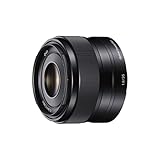
- 3. Sony SEL35F18 35mm f/1.8 — Most versatile
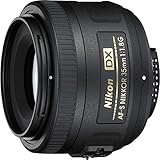
- 4. Nikon 35mm f/1.8G AF-S DX — Best upgrade
- 5. JJC Tulip Flower Lens Hood for RF 35mm — Best budget pick
- What actually decides a 35mm purchase?
- Does the professional label mean anything here?
- Mount compatibility, in plain terms
- How close can each one focus?
- The verdict
- FAQ
The best professional 35mm camera lens in this set is the Canon RF35mm F1.8 IS Macro STM, because it pairs a 0.5x macro magnification ratio with 5 stops of optical stabilization in a 0.68 lb barrel that suits EOS R bodies. Nikon Z shooters who need a wider aperture should go straight to the NIKKOR Z 35mm f/1.4, which trades the macro trick for f/1.4 light-gathering. Sony users get their own answer below.
The trap with a 35mm search is comparing focal length as if it decides anything. It does not. Every lens here is 35mm. What splits them is aperture, stabilization, close-focus distance, and, above all, which camera mount they fit. A stunning Nikon Z lens is a paperweight on a Sony body, and vice versa. That is the real filter, and it is the one I sorted the shortlist on first.
Best professional 35mm camera lens at a glance
| Pick | Mount | Aperture | Price |
|---|---|---|---|
Best overall Canon RF35mm F1.8 IS Macro STM |
Canon RF mirrorless | f/1.8 | Check Price |
Best premium Nikon NIKKOR Z 35mm f/1.4 |
Nikon Z mirrorless | f/1.4 | Check Price |
Most versatile Sony SEL35F18 35mm f/1.8 |
Sony E APS-C | f/1.8 | Check Price |
Best upgrade Nikon 35mm f/1.8G AF-S DX |
Nikon F DX DSLR | f/1.8 | Check Price |
Best budget pick JJC Tulip Hood for RF 35mm |
Accessory, 52mm | Accessory | Check Price |



How I screened this shortlist
The five picks come from three brands and three mount systems, and I ranked them by the criteria a 35mm buyer weighs against a spec sheet: maximum aperture, image stabilization, minimum focus distance, weight, and warranty. Two lenses were left in even though they are not head-to-head competitors, because the buyer for a "35mm" search is not one person.
Here is the criteria order I used, top to bottom:
- Mount compatibility, because a lens that does not fit is not a lens.
- Maximum aperture, because f/1.4 and f/1.8 are meaningfully different in low light.
- Optical image stabilization, because it decides handheld shutter speeds.
- Minimum focus distance and magnification, because 35mm doubles as an environmental close-up lens for many shooters.
- Weight, because a 0.91 lb lens feels different on the front of a body than a 5.47 oz one.
The JJC hood is here because a professional 35mm lens is often bought with a hood, and the Canon RF option in this set does not include one in the box that I can confirm from the listing.
1. Canon RF35mm F1.8 IS Macro STM — Best overall
The best professional 35mm camera lens here for Canon EOS R shooters, because 0.5x macro magnification plus 5-stop stabilization is a rare combination at this size.
Best for: Canon EOS R shooters who want one lens for portraits, street and close-ups Skip it if: you shoot Sony or Nikon
What sets this Canon apart in the group is what it can do besides sit at 35mm. Canon states a 0.5x magnification ratio and a minimum focusing distance of 0.56 ft (0.17 m), which means it doubles as a half-life-size macro without a second lens in the bag. The optical image stabilization is quoted at up to 5 stops of shake correction, and the barrel weighs 0.68 lb in a 2.5 by 2.9 by 2.9 in package. That is a small, light lens for what it does. The control ring is a Canon RF-mount touch that lets you set aperture, ISO or exposure compensation without leaving your grip.
Released in 2018, it carries a 1-year manufacturer limited warranty. The trade-off against the Nikon Z premium pick is a narrower f/1.8 maximum aperture and, of course, a Canon-only mount. Against the Sony 1.8, it gives up nothing on aperture and adds real macro reach.
Pros:
- 0.5x macro magnification at 35mm
- 5-stop optical image stabilization claim
- Compact 0.68 lb, 2.9 in barrel
- Control Ring for direct setting changes
- 1-year manufacturer limited warranty
Cons:
- Canon RF mount only
- f/1.8, not f/1.4
- Warranty period is short for a lens purchase
2. Nikon NIKKOR Z 35mm f/1.4 — Best premium
The widest maximum aperture in this set and the newest release, aimed at Nikon Z shooters who care about low light and video.

Best for: Nikon Z owners who need f/1.4 for low light and video Skip it if: weight and size on a small body matter to you
The Z 35mm f/1.4 is a 2024 release, the most recent lens here, and it is the only one in this set with an f/1.4 maximum aperture. Nikon frames it as a video workhorse, citing a silent STM drive that keeps operational noise down and suppresses focus breathing, and a compact enough form factor for gimbal work. The lens weighs 0.91 lb, measures 2.93 by 3.41 by 2.93 in, and focuses as close as 10.6 in from the subject. On a DX-format Z body, Nikon says the field of view is equivalent to about 52mm.
Against the Canon overall pick, it wins on aperture and loses on stabilization and macro reach: the listing highlights low-light freedom rather than a stated stabilization figure. It is also the heaviest lens in the set. If you shoot Nikon Z and pull the shutter often in dim rooms, that weight is the price of the extra stop.
Pros:
- f/1.4 maximum aperture, widest in this set
- 2024 release, newest optics of the group
- 10.6 in minimum focus distance
- Silent STM drive Nikon markets for video
- Full-frame Z-mount coverage
Cons:
- Heaviest lens here at 0.91 lb
- Nikon Z mount only
- Highest price position of the five picks
3. Sony SEL35F18 35mm f/1.8 — Most versatile
The lightest lens in the shortlist and the answer for Sony APS-C shooters who want a small walkaround prime.
Best for: Sony APS-C users who want a light, walkaround prime Skip it if: you need close-up magnification or a full-frame image circle
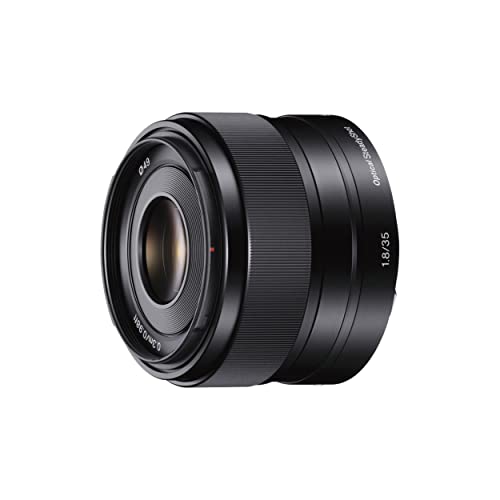
At 5.47 oz, the Sony SEL35F18 is by a clear margin the lightest of the five, which matters on a small Alpha body where a heavy front element tips the balance forward. The barrel is 2.48 by 1.77 by 2.48 in. Sony quotes an APS-C angle of view of 44°, a maximum magnification ratio of 0.15x, and a minimum focus distance of 0.99 ft (0.3 m). Built-in image stabilization is listed, along with silent, high-speed autofocus that Sony pitches at movie shooters, and a direct manual focus override.
Released in 2012, this is the oldest lens in the set, and it shows in the modest 0.15x magnification. Against the Canon macro pick, it cannot get near the same close-up work. Against the Nikon Z premium option, it is nearly a third of the weight but a stop slower and APS-C only. The trade-off is deliberate: this is the small, quiet, walkaround choice.
Pros:
- Lightest lens in this set at 5.47 oz
- Built-in image stabilization
- Silent autofocus Sony positions for video
- Compact 2.48 in barrel
- Direct manual focus override
Cons:
- APS-C image circle, not full frame
- 0.15x magnification, low for close-ups
- 2012 optics against a 2024 competitor
- 1-year parts coverage only
4. Nikon 35mm f/1.8G AF-S DX — Best upgrade
A factory-refurbished DX prime for Nikon DSLR owners still shooting the F mount.

Best for: Nikon DX DSLR owners moving off the kit zoom Skip it if: you have already switched to a Z-mount mirrorless body
This is the only F-mount lens in the set and the only one sold as a factory-refurbished unit. The listing describes it as the Nikon 35mm f/1.8G DX AF-S Nikkor Lens, refurbished, with manufacturer-supplied accessories and full USA warranties. Beyond model number 2183 and an f/1.8 maximum aperture, the published spec sheet is thin: dimensions and weight on the listing do not match the physical lens, so I would not quote them. That is unusual in this set, and it is worth flagging.
The reason it earns the upgrade slot is context. If you own a Nikon DX DSLR body, this is the natural first prime after the kit 18-55, and buying refurbished lowers the price position to entry level. Against the Z 35mm f/1.4, it gives up a stop, the newest optics, and mirrorless mount benefits. Against the Sony, it swaps a modern APS-C E-mount for an older DX F-mount ecosystem. The value is the mount you already own.
Pros:
- f/1.8 aperture on a DX-format prime
- Entry-tier price position in this set
- Manufacturer-supplied accessories and USA warranty per listing
- Second-cheapest of the five here
- Sells faster than the rest of this set
Cons:
- Nikon F-mount DX only
- Sold refurbished, not new
- Limited published specifications on the listing
- No stated stabilization figure
5. JJC Tulip Flower Lens Hood for RF 35mm — Best budget pick
A dedicated hood and impact bumper for the Canon RF 35mm overall winner, in the cheapest slot in this set.

Best for: Canon RF 35mm owners who want flare control and impact protection Skip it if: you do not already own the Canon RF 35mm lens
The JJC hood is not a lens, and it is not pretending to be one. It is a purpose-built accessory for the Canon RF35mm F1.8 IS Macro STM on EOS R6, R5, R and RP bodies. JJC describes a tulip petal shape, reversible mounting for storage, ABS construction, and compatibility with 52mm filters and 52mm lens caps. The hood weighs 4.44 oz and measures 1.93 by 3.5 by 3.5 in. Install order matters: JJC says a PVC protective pad goes on first, then an adapter ring, then the hood connects to the ring.
Why it belongs on a professional shortlist: the overall winner ships without a matched hood I can confirm from its listing, and shooting into side light without one costs you contrast. The trade-off is obvious. It only fits one specific Canon lens, and the third-party origin puts fit and finish below a first-party hood. For anyone already committed to the Canon pick, that is fine.
Pros:
- Purpose-built for the Canon RF 35mm F1.8 Macro
- Reversible for storage
- ABS construction, 4.44 oz
- 52mm filter and cap compatibility
- Cheapest of the five picks
Cons:
- Fits only the Canon RF 35mm F1.8 Macro
- Not a lens; adds no optical capability
- Third-party rather than Canon-branded
- Multi-step install with an adapter ring
What actually decides a 35mm purchase?
Most guides compare 35mm lenses on maximum aperture alone. That is one factor of five. Here is the order that predicts satisfaction better:
- Mount. The lens has to fit. Canon RF, Sony E, Nikon Z and Nikon F are not interchangeable, and adapters change size, weight and autofocus behaviour.
- Aperture. f/1.4 gathers roughly twice the light of f/1.8, and the depth of field is shallower. It also costs more and weighs more.
- Stabilization. The Canon lists 5 stops of optical stabilization; the Sony lists built-in stabilization without a figure; the Nikon Z 35mm f/1.4 does not lead on stabilization at all. Handheld video in dim rooms rewards this.
- Minimum focus distance. The Canon focuses to 0.56 ft with 0.5x magnification. The Nikon Z reaches 10.6 in. The Sony sits at 0.99 ft and 0.15x. If you shoot food, product or details, this is a big split.
- Weight. 5.47 oz on the Sony versus 0.91 lb on the Nikon Z is not a rounding error. It changes how the camera hangs on a strap.
Pick the mount first, then decide which of the remaining four criteria is your deal-breaker. Everything else is negotiable.
Does the professional label mean anything here?
The Amazon search that returned these listings did not filter strictly on "professional", so treat the qualifier as your job, not Amazon's. What separates a professional-grade 35mm from a consumer one, in the terms this data supports:
- A wide, constant maximum aperture, f/1.8 or wider.
- Full electronic communication with the body: the Canon lists a 12-pin communication system, for example.
- Silent, stepping-motor autofocus suitable for video, which the Canon (STM), Nikon Z (STM) and Sony (silent, smooth high-speed AF) all claim.
- A stated warranty from the manufacturer.
Three of the five picks meet all four points on their published spec sheets. The refurbished Nikon F meets the aperture and AF points but publishes less around the rest. The JJC hood is an accessory, judged on a separate axis.
That is the honest read: the professional cutoff in this set is really about optical capability and system integration, not marketing wording.
Mount compatibility, in plain terms
If you already own a body, the mount ends the discussion:
- Canon EOS R, R5, R6, RP: Canon RF35mm F1.8 IS Macro STM.
- Nikon Z series mirrorless: NIKKOR Z 35mm f/1.4.
- Nikon DX DSLR (D3500, D5600, D7500 and similar): Nikon 35mm f/1.8G AF-S DX.
- Sony APS-C E-mount (a6000-series and similar): Sony SEL35F18.
The JJC hood is Canon RF 35mm-specific. It is not a universal accessory. Never buy a lens because the review is glowing; buy it because it fits the body sitting on your shelf. This is the single most common expensive mistake in the 35mm market.
How close can each one focus?
Close focus is where 35mm lenses separate. From the published specifications:
- Canon RF35mm F1.8 IS Macro STM: 0.56 ft (0.17 m), 0.5x magnification.
- Nikon NIKKOR Z 35mm f/1.4: 10.6 in.
- Sony SEL35F18: 0.99 ft (0.3 m), 0.15x magnification.
- Nikon 35mm f/1.8G AF-S DX: not stated on the listing.
- JJC hood: not applicable.
The Canon is the clear standout for anything close-up: 0.5x is roughly half life-size, which is genuine macro territory for a lens that is not sold as a macro-only tool. The Sony's 0.15x is standard for a 35mm prime and fine for environmental portraits, but it will not fill the frame with a small object. The Nikon Z's 10.6 in figure lands between the two. If you photograph rings, food, watches or product details alongside people, this criterion may matter more to you than aperture.
The verdict
For Canon shooters, the best professional 35mm camera lens in this set is the Canon RF35mm F1.8 IS Macro STM. The combination of 0.5x macro, 5-stop stabilization, a Control Ring and a 0.68 lb body means one lens covers portraits, street, product details and low-light handheld work on any EOS R body. That is unusual, and it is why it wins overall.
For Nikon Z shooters, the answer flips to the NIKKOR Z 35mm f/1.4. The extra stop of light and the 2024 optics matter more on a modern mirrorless body than macro capability does, and Nikon's video positioning is credible on the spec sheet. Accept the 0.91 lb weight and the highest price position of the five.
For Sony APS-C shooters, the SEL35F18 remains the walkaround pick. It is old but light, and the mount decides it. For Nikon F DSLR owners not ready to switch, the refurbished 35mm f/1.8G AF-S DX is the sensible upgrade. And if you buy the Canon overall winner, the JJC hood is a small addition that protects the front element.
FAQ
Is a 35mm lens worth it for a professional?
Is a 35mm lens worth it for a professional? Yes, and it is one of the most reached-for focal lengths in photojournalism, documentary, environmental portrait and event work. A 35mm sits between wide and normal, so it captures context without distortion. In this set, four of the five options are actual 35mm lenses; the fifth is a hood built for one of them.
Which is the best professional 35mm camera lens for video?
The best professional 35mm camera lens for video in this set is the Nikon NIKKOR Z 35mm f/1.4, on Nikon Z bodies. Nikon lists a silent STM drive that suppresses operational noise and focus breathing, and the f/1.4 aperture lifts low-light performance. On Canon, the RF35mm F1.8 IS Macro STM's 5-stop stabilization is the stronger handheld video argument.
Canon RF 35mm f/1.8 or Nikon Z 35mm f/1.4?
Canon RF 35mm f/1.8 or Nikon Z 35mm f/1.4? Mount decides it, not spec sheet. If your body is Canon EOS R, the RF lens is your only option here and it brings 0.5x macro and 5-stop stabilization. If your body is Nikon Z, the f/1.4 aperture and 2024 optics justify the higher price position and the 0.91 lb weight.
Do I need image stabilization on a 35mm lens?
Do I need image stabilization on a 35mm lens? Not always, but it helps handheld work in low light and steadies video. The Canon RF pick lists 5 stops of optical stabilization; the Sony lists built-in stabilization without a figure. If your camera body already has sensor-shift stabilization, the lens's contribution matters less. If it does not, prioritise stabilization.
What does 0.5x macro magnification actually mean?
What does 0.5x macro magnification mean in practice? A subject roughly 1.4 in wide fills the height of a full-frame sensor at 0.5x. That is half life-size, close enough for watches, food details and small products without dedicated macro glass. Only the Canon RF35mm F1.8 IS Macro STM in this set reaches that figure, at a minimum focusing distance of 0.56 ft.
Start with the body you already own, then check which lens on this list fits its mount. That single filter answers the question for four of the five picks before aperture, stabilization or macro reach enters the conversation. Once mount is settled, the second question is whether you photograph close-up subjects often enough to prefer the Canon's 0.5x reach over the Nikon Z's f/1.4 speed. Most shooters underweight close focus and overweight aperture. Both matter, but only one of them will make you buy a second lens later.