Best Full Frame 35mm Camera Lens for Sony E-Mount

Six 35mm primes for Sony E-mount, ranked by what actually decides a walkaround lens: aperture, weight, close focus, and how the glass renders wide open.

By Sam BaileyUpdated 15 min read
On this page
- Best full frame 35mm camera lens at a glance
- How I cut the field down to six
- 1. Viltrox 35mm F1.8 II EVO FE APO — Best overall
- 2. Sony FE 35mm f/1.4 GM — Best premium
- 3. Samyang SYIO3518 35mm F1.8 AF — Most versatile
- 4. Tamron 35mm f/2.8 Di III OSD M1:2 — Best warranty
- 5. Meike 35mm F2.0 AF — Best budget pick
- 6. Sony 35mm F2.8 Sonnar T FE ZA — Best upgrade
- What actually decides a 35mm prime
- Aperture, weight and close focus compared
- Which pick fits your camera body?
- What the listings do not tell you
- The verdict
- FAQ
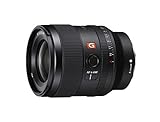
The best full frame 35mm camera lens for Sony E-mount right now is the Viltrox 35mm F1.8 II EVO FE APO, an APO-corrected prime with 13 elements in 10 groups, a 0.34m minimum focus, and a body that weighs just 0.73 lb. If you need a full stop more light and Sony's own service, the Sony FE 35mm f/1.4 GM is the alternate pick at 1.16 lb.
Best full frame 35mm camera lens at a glance
| Pick | Max aperture | Weight | Price |
|---|---|---|---|
Best overall Viltrox 35mm F1.8 II EVO FE APO |
f/1.8 | 0.73 lb | Check Price |
Best premium Sony FE 35mm f/1.4 GM |
f/1.4 | 1.16 lb | Check Price |
Most versatile Samyang 35mm F1.8 AF |
f/1.8 | 7.4 oz | Check Price |
Best warranty Tamron 35mm f/2.8 Di III OSD M1:2 |
f/2.8 | 7.4 oz | Check Price |
Best budget pick Meike 35mm F2.0 AF |
f/2.0 | not listed | Check Price |
Best upgrade Sony 35mm F2.8 Sonnar T FE ZA |
f/2.8 | 4.23 oz | Check Price |



How I cut the field down to six
I started with the full slate of full frame 35mm primes on Amazon and cut hard. Anything without a native Sony E mount was out, because that is the mount every product in this set uses. Anything without a published weight or dimensions went out too, since the whole appeal of a 35mm prime is that it disappears on the camera. Three specific reasons killed the rest.
- No published full frame image circle. Several listings promise "35mm" but bury the fact that they only cover APS-C. A crop lens on an A7 body vignettes badly.
- No autofocus. Manual-only 35mm primes have their audience, but a best full frame 35mm camera lens roundup that skips AF fails most readers.
- No published warranty terms. Two listings gave no coverage information at all. When a lens costs a real amount of money, that is not acceptable.
What survived: five autofocus primes native to Sony E, plus one Zeiss-branded classic that has been in the catalogue since 2013. Apertures spread from f/1.4 to f/2.8. Weights range from 4.23 oz to 1.16 lb. Warranties span one year to six.
1. Viltrox 35mm F1.8 II EVO FE APO — Best overall
This is the sharpest all-round pick in the set, and the only one with an APO optical design.
Best for: hybrid shooters who want APO-grade optics without the GM price position Skip it if: you need an f/1.4 aperture or Sony's own service network
What separates this lens from the rest of the set is the optical formula. Viltrox says the design uses 13 elements in 10 groups, with 2 ED, 3 HR and 1 UA element, and calls it an APO layout. APO correction targets colour fringing at the edges of high-contrast subjects: backlit branches, chrome trim, hair against sky. It is the only lens here that makes that specific claim. At 0.73 lb it sits between the two Sony primes on the scale. Dimensions of 2.72 x 2.99 x 2.72 in keep it compact on an A7C or A7CII body. Viltrox says the minimum focus distance is 0.34m, which is closer than the Sony Sonnar's 0.35m and lets you fill the frame with a coffee cup on the table. The physical controls include an aperture ring with a CLICK switch, an AF/MF switch and a programmable Fn button, which is more direct control than any other f/1.8 lens in this comparison. The trade-off is Viltrox's service footprint against Sony's, and the one-stop gap to the GM.
Pros:
- APO design targets edge colour fringing
- 0.34m minimum focus is closest in the set
- Dedicated aperture ring with click switch
- 0.73 lb sits between the two Sony primes
- Fn button for custom assignment
Cons:
- One stop slower than the Sony GM
- No published warranty term in the listing
- Viltrox service network is smaller than Sony's
2. Sony FE 35mm f/1.4 GM — Best premium
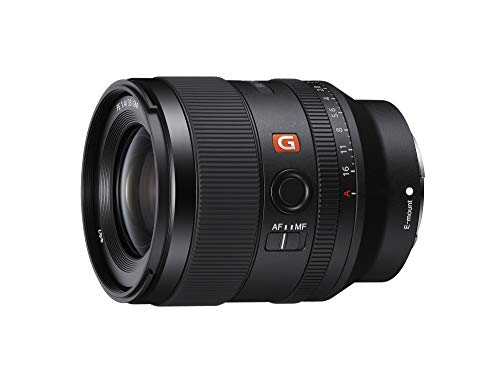
The only f/1.4 lens in the set, and the one built for full-time professional work.
Best for: wedding and portrait shooters who need f/1.4 and G Master rendering Skip it if: you want a light lens for all-day carry
The f/1.4 aperture is the whole argument for this lens. Every other pick in the roundup tops out at f/1.8 or slower, so the GM lets in either a full stop or two full stops more light than anything else here, depending on the alternative. Sony says the optical design includes two XA (Extreme Aspheric) elements for high resolution and an ED element for reduced chromatic aberration, and adds Nano AR coating II to suppress flare. The listing carries a 1 year limited manufacturer warranty and a 2021 release date, so this is the newest Sony-branded 35mm in the set. Weight is 1.16 lb, and that is the honest cost of the wider aperture: it is the heaviest lens here, 59% heavier than the Viltrox and roughly 2.7 times the weight of the Sonnar T. Dust and moisture resistance plus a fluorine front coating are in the feature list. If you shoot events for a living, the extra stop and the Sony warranty pathway carry it. For most other buyers it is more lens than the job needs.
Pros:
- Only f/1.4 aperture in this comparison
- Two XA aspheric elements per Sony
- Nano AR coating II claim for flare control
- 1 year manufacturer warranty published
- Dust and moisture resistant construction
Cons:
- Heaviest lens in the set at 1.16 lb
- Highest price position of the six
- 5.51 x 6.77 x 5 in listed dimensions on the bulky side
3. Samyang SYIO3518 35mm F1.8 AF — Most versatile
The pick with the deepest control set, thanks to a firmware-updatable custom switch.

Best for: street and video shooters who want a custom aperture ring and weather sealing Skip it if: you shoot mostly stills and never touch the firmware
Samyang lists this lens at 7.4 oz, which ties it with the Tamron for the lightest f/2 or faster lens in the set. The optical design uses 10 elements in 8 groups with 2 ASP and 2 ED elements, per the manufacturer. What makes this pick different is the Custom Switch: Samyang says the control ring can be assigned to either aperture or manual focus, and the lens accepts firmware updates through Samyang's Lens Station. Neither the Sony primes nor the Viltrox offer that kind of reassignable ring on the barrel. The Linear STM motor targets video shooters, and Samyang claims minimal focus breathing, which matters if you rack focus between subjects. Weather sealing and an aluminium housing are in the listing. The warranty is 1 year manufacturer, matching the Sonys and short of the Tamron. The trade-off against the Viltrox is optical: no APO claim, and no dedicated Fn button, so the payoff is control and weight rather than pure sharpness.
Pros:
- 7.4 oz weight ties the lightest fast prime
- Reassignable control ring via Custom Switch
- Firmware updates through Lens Station
- Weather sealing and aluminium housing per listing
- Linear STM motor targets video use
Cons:
- No APO or XA element claims
- 1 year warranty is short of the Tamron
- Requires the Lens Station accessory for firmware
4. Tamron 35mm f/2.8 Di III OSD M1:2 — Best warranty
The only 6 year warranty in the roundup, and a 1:2 macro reproduction ratio to go with it.

Best for: buyers who want the longest coverage and 1:2 macro in a light body Skip it if: you shoot mostly wide open in low light
Tamron publishes a 6 year limited warranty for USA buyers on this lens. That is six times the coverage of the Sony GM and the Samyang, and no other lens in this set comes close. The second differentiator is the 1:2 macro claim in the model name: Tamron says the lens will reproduce a subject at half life size on the sensor, which is closer than the 0.12x maximum magnification the Sony Sonnar publishes. Weight is 7.4 oz and the dimensions are 2.87 x 2.5 x 2.87 in, which is the second-cheapest of the six and lands in entry price territory. The concession is aperture: f/2.8 is a full stop slower than the f/1.8 pair and two stops slower than the Sony GM. In practical terms, you will run higher ISO in dim rooms and the background separation will look less dramatic. Moisture-resistant construction is in the listing. If your priorities are close-up work, long coverage and light weight, the maths adds up.
Pros:
- 6 year Tamron USA warranty, longest here
- 1:2 macro reproduction ratio claim
- 7.4 oz body ties the lightest f/2 or faster
- Moisture-resistant construction listed
- Entry price position
Cons:
- f/2.8 is the slowest tied aperture in the set
- No dedicated aperture ring on the barrel
- Older 2020 release, no updated version
5. Meike 35mm F2.0 AF — Best budget pick
The cheapest way into a full frame 35mm prime on Sony E, with autofocus and an updatable firmware.

Best for: first-time full-frame owners testing whether 35mm suits their eye Skip it if: you need a published warranty longer than a year
This is the cheapest of the six. Meike says the optical design uses 11 elements in 9 groups with 2 ED elements, 1 high refractive index element and 1 ultra high refractive element, and drives autofocus with an STM stepping motor. The listing confirms compatibility with the full A7 lineage including A9, A9II, A7III, A7IV, A7C and A7SIII bodies. The f/2 aperture sits between the f/1.8 pair and the f/2.8 pair in the set. Meike also says the lens accepts firmware updates through a Type-C interface, which is unusual at this price and useful if a body update breaks autofocus. The listing is thin on the details that matter most: no weight figure is published, and the dimensions of 0.2 x 0.2 x 0.2 in are clearly a listing error rather than the real lens size. Warranty is 1 year. Treat this as a low-risk way to find out whether the 35mm view is yours before you spend on a Sony or a Viltrox.
Pros:
- Cheapest of the six picks
- STM autofocus with A7 series compatibility
- 11 elements in 9 groups per Meike
- Type-C firmware update path
- f/2 aperture faster than either f/2.8 pick
Cons:
- No usable weight or dimensions in the listing
- 1 year warranty only
- Meike service network is limited
6. Sony 35mm F2.8 Sonnar T FE ZA — Best upgrade
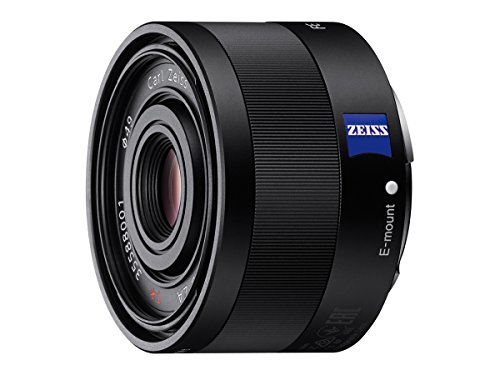
The lightest lens in the roundup by a wide margin, and the only Zeiss-branded pick.
Best for: A7C and A7CII owners who want the lightest Zeiss-branded 35mm Skip it if: you want a modern optical design from the last five years
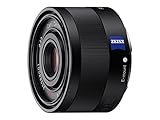
At 4.23 oz this Sonnar is the lightest lens in the comparison by a comfortable margin. It is roughly 43% lighter than the Tamron and the Samyang and about a quarter of the weight of the Sony GM. The dimensions of 2.44 x 1.46 x 2.44 in match that weight and make it the natural fit on the compact A7C body, where a larger lens would front-load the camera. The optical formula is 7 elements in 5 groups, which Sony pairs with a Carl Zeiss T coating for flare control. Minimum focus distance is 0.35m and maximum magnification is 0.12x, so it does not compete with the Tamron for close work. The 2013 release date matters: this is the oldest lens in the set, and the design predates Sony's current XA aspheric era. It carries a 1 year parts warranty, dust and moisture resistant sealing, and a 49mm filter thread. The trade-off is age against portability, and portability is a real feature on a small body.
Pros:
- 4.23 oz, lightest lens in the roundup
- 2.44 x 1.46 x 2.44 in compact body
- Carl Zeiss T coating claim
- Dust and moisture resistant listed
- 49mm filter thread is easy to source
Cons:
- 2013 release, oldest design in the set
- f/2.8 is the slowest tied aperture here
- 0.12x maximum magnification, not close-focus friendly
What actually decides a 35mm prime
Most guides to the best full frame 35mm camera lens compare maximum aperture and stop there. That is the wrong metric on its own. Aperture matters, but a full stop of light means nothing if the lens is too heavy to bring on the trip you actually take. The right shortlist starts from three questions, in order.
- How and where do you carry it? A 1.16 lb lens on a small A7C body will drag the camera face-down in a sling. A 4.23 oz Sonnar rides on the same body invisibly.
- How close do you focus? A 1:2 macro or a 0.34m minimum focus opens up food, flowers and product work that a 0.35m lens with 0.12x magnification cannot touch.
- What breaks the shot when you get it home? For most 35mm work at f/1.8 wide open, that is colour fringing at high-contrast edges. APO or XA correction is the direct fix, and only two lenses in this set claim it.
Aperture matters after those three are settled, not before. The Sony GM's f/1.4 wins the aperture race, but if you never carry it, it never takes the picture.
Aperture, weight and close focus compared
The three columns that decide most 35mm purchases are aperture, weight and how close the lens focuses. Here is how the six picks line up on those.
- f/1.4: Sony FE 35mm f/1.4 GM, 1.16 lb, minimum focus not published in the listing feature block.
- f/1.8: Viltrox 35mm F1.8 II EVO FE APO, 0.73 lb, 0.34m minimum focus.
- f/1.8: Samyang 35mm F1.8 AF, 7.4 oz, minimum focus not published.
- f/2.0: Meike 35mm F2.0 AF, weight not published, close focus not published.
- f/2.8: Tamron 35mm f/2.8 Di III OSD, 7.4 oz, 1:2 macro reproduction ratio.
- f/2.8: Sony 35mm F2.8 Sonnar T FE ZA, 4.23 oz, 0.35m minimum focus, 0.12x magnification.
The picture from that stack is straightforward. If light is the constraint, the GM is alone at f/1.4. If weight and light both matter, the Viltrox is the balance point at 0.73 lb and f/1.8. If close focus matters more than aperture, the Tamron's 1:2 macro is unique in this set. And if weight is the whole game, the Sonnar T's 4.23 oz stands apart.
Which pick fits your camera body?
The listings for four of these lenses spell out compatible Sony bodies, and the pairings matter more than the ASIN suggests. The Viltrox listing names the A7IV, ZV-E1, A7CII, A7RV, FX3, A7SIII, A7CR, A7III, A7C, A1, A7RIV, A9, A9II, A7RIII and ZV-E10. The Meike listing repeats most of the A7 lineage. The Sony Sonnar T is a natural fit on the A7 series bodies and shines on the compact A7C and A7CII because of its 4.23 oz weight. The GM's 1.16 lb belongs on the A7RV or A1 grip, where the body has the mass to balance it.
Two questions decide the pairing:
- Does the body have a grip large enough to carry the lens front-heavy? An A7CII with a GM feels unbalanced; an A7RV with a Sonnar T feels tiny.
- Does the body focus quickly enough for the video work you plan? Samyang and Viltrox both list STM motors; Tamron uses OSD. For 4K video on a ZV-E1 or FX3, the STM options in this set are the safer path.
What the listings do not tell you
Amazon listings for lenses hide as much as they show. Three specific gaps are worth flagging before you buy.
- Filter thread diameter. Only the Sonnar T listing publishes it, at 49mm. If you stack ND filters or use a variable ND for video, this is not optional information. Check the manufacturer's spec page before ordering.
- Weather sealing tier. Sony, Samyang and Tamron all use the phrase "moisture resistant" or "weather sealing", but there is no shared standard behind the words. A GM lens on an A7RV is a sealed system; a Meike on the same body is not, whatever the marketing says.
- Focus breathing behaviour. Samyang is the only listing that mentions minimal focus breathing directly. For hybrid shooters recording video, this decides whether racking focus looks intentional or amateur. If the listing does not mention it, assume normal breathing and test on your own body.
None of these are dealbreakers. They are the questions you need to answer yourself, because the listing did not.
The verdict
The best full frame 35mm camera lens for most Sony E-mount shooters is the Viltrox 35mm F1.8 II EVO FE APO. It is the only lens in this set that publishes an APO design claim, its 0.34m minimum focus is closer than any other, and at 0.73 lb it fits every A7 body without unbalancing the small ones. The physical aperture ring, AF/MF switch and Fn button give it more direct control than either the Sony Sonnar T or the Samyang.
If you shoot events or weddings for a living, the Sony FE 35mm f/1.4 GM is the right buy instead. The gap is one full stop of light, and Sony's own warranty pathway. That is a real advantage, but you carry 1.16 lb to get it, and the price position is the highest in the set. Two conditions flip the decision: if you need 1:2 macro reproduction in the same lens, the Tamron is the only fit; if the A7C or A7CII is your only body and weight rules everything, the 4.23 oz Sony Sonnar T is the honest answer. Everything else in this best full frame 35mm camera lens roundup serves a narrower buyer.
FAQ
Is a 35mm lens wide enough for full frame landscape work?
Is a 35mm lens wide enough depends on the landscape. On a full frame body, 35mm gives roughly a 63 degree diagonal angle of view, which is wider than a 50mm but narrower than a 24mm. It suits environmental landscapes with a foreground subject, city scenes and mountain valleys where you want context. For sweeping vistas without a foreground anchor, a 24mm or 20mm will serve you better.
Is the Sony FE 35mm f/1.4 GM worth the price over the Viltrox f/1.8?
Is the Sony FE 35mm worth the extra outlay depends on whether you actually shoot at f/1.4. The GM buys you one full stop of light, two XA aspheric elements per Sony's spec sheet, and a Sony warranty pathway. It costs you 0.43 lb of extra weight on the front of the camera. For paid event work, yes. For weekend photography where the lens has to live on the body, the Viltrox is the smarter buy.
Viltrox 35mm F1.8 II EVO or Samyang F1.8 AF for video?
Viltrox 35mm F1.8 II EVO or Samyang comes down to control layout. The Samyang lists a reassignable control ring and firmware updates through its Lens Station, and it weighs 7.4 oz against the Viltrox's 0.73 lb. The Viltrox counters with a dedicated APO optical design, a click switch on its aperture ring and a programmable Fn button. For talking-head video, the Samyang is easier to configure. For hybrid work, the Viltrox is sharper.
Which full frame 35mm lens is best for the compact Sony A7C?
Which full frame 35mm lens fits the A7C best is a weight question first. The Sony 35mm F2.8 Sonnar T FE ZA at 4.23 oz is the lightest lens in this set and matches the A7C body without unbalancing the grip. The Tamron 35mm f/2.8 at 7.4 oz is the second lightest and adds 1:2 macro. The Sony GM at 1.16 lb will work, but the combination front-loads the camera awkwardly.
Does a full frame 35mm lens work on APS-C bodies too?
Does a full frame 35mm lens work on an APS-C body: yes, and the image circle is bigger than the sensor needs, so you get the centre of the frame with no vignetting. The effective angle of view narrows to roughly 52mm equivalent on Sony's 1.5x crop, which turns a walkaround wide into a short portrait length. All six lenses in this roundup list Sony E mount compatibility and will mount on ZV-E10 or A6000 series bodies.
The right way to buy a 35mm prime is to start with the body you own and the trip you plan, then work back to aperture. If your camera is an A7RV or A1, the Viltrox 35mm F1.8 II EVO FE APO is the default answer, and only a paid f/1.4 workflow should move you off it. If your camera is an A7C or A7CII, weigh the Sonnar T and the Viltrox against each other and let the trip decide. Whichever way you go, order a proper lens hood and one 49mm or matching-thread ND filter with the lens, because the box does not include the accessories that let a 35mm prime do its best work in bright light.