Best Wireless Softbox Lighting Kits: Torjim Leads
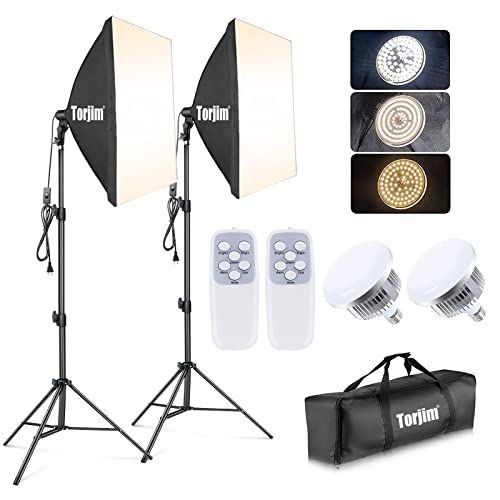
Panel size decides softbox quality far more than wattage does. Six kits compared on published specs, from a 16x16in entry pair to a 2x180W Godox strobe kit, with the buyer profile each one actually fits.
By Sam BaileyUpdated 17 min read
On this page
- Best wireless softbox lighting kit for professionals at a glance
- How I matched these kits to buyer profiles
- Why panel size beats wattage in a wireless softbox lighting kit
- 1. Torjim Softbox Photography Lighting Kit — Best overall
- 2. Godox Professional Studio Flash Kit for Photography — Best premium
- 3. Skytex Softbox Lighting Kit 2Pack 20x28in Soft Box — Best warranty
- 4. MOUNTDOG Softbox Lighting Kit — Best upgrade
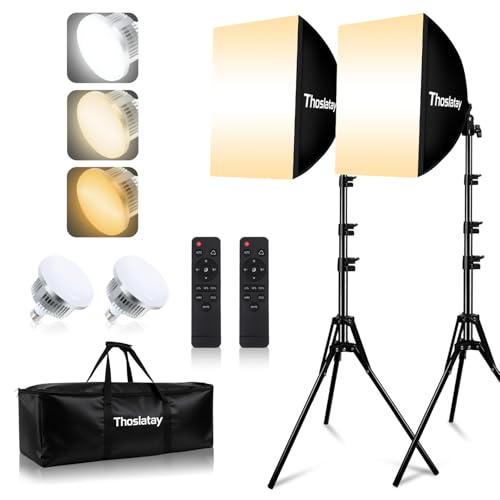
- 5. Thoslatay Softbox Lighting Kit 2pack — Most versatile
- 6. EMART Softbox Photography Lighting Kit 2Pack 50W LED — Best budget pick
- Does "professional" mean anything on these listings?
- Continuous LED or strobe: which wireless softbox lighting kit suits your work?
- What more money buys across these six kits
- The verdict
- FAQ
The best wireless softbox lighting kit for professionals is the Torjim Softbox Photography Lighting Kit, because its two 27 x 27 in panels are the largest continuous-light boxes in this group and its 85W bulbs cover 3000K to 7500K from the remote. If you shoot stills and need to freeze motion, the Godox K180A strobe kit with 2 x 180W heads takes over instead.
Most buyers compare wattage. That is the number printed largest on every listing, and it is the least useful one here. Three of these six kits run identical 85W bulbs, which means wattage tells you nothing about which of the three produces better light. What separates them is the surface area of the diffusion panel and how far the colour temperature range stretches.
Best wireless softbox lighting kit for professionals at a glance
| Pick | Panel size | Bulb & colour range | Price |
|---|---|---|---|
Best overall Torjim Softbox Photography Lighting Kit |
27 x 27 in, 2 pcs | 85W, 3000K–7500K | Check Price |
Best premium Godox Professional Studio Flash Kit |
20 x 28 in, 2 pcs | 2x 180W strobe, 5600K | Check Price |
Best warranty Skytex Softbox Lighting Kit |
20 x 28 in, 2 pcs | 85W, 2700K–6400K | Check Price |
Best upgrade MOUNTDOG Softbox Lighting Kit |
19.7 x 27.5 in, 2 pcs | 85W, 5700K fixed | Check Price |
Most versatile Thoslatay Softbox Lighting Kit 2pack |
16 x 16 in, 2 pcs | 85W, 2700K–6400K | Check Price |
Best budget pick EMART Softbox Photography Lighting Kit |
16 x 16 in, 2 pcs | 50W, 3000K–6000K | Check Price |


How I matched these kits to buyer profiles
I did not start from a spec sheet. I started from the five jobs people actually buy a wireless softbox lighting kit for professionals to do, then read the published specifications for each listing to see which kit fits which job.
The five profiles:
- The portrait and interview shooter. Needs one large source that wraps a face. Panel area is the only thing that matters, so the 27 x 27 in Torjim boxes win.
- The stills photographer freezing motion. Continuous LED cannot do this at low ISO. Only the Godox strobe kit qualifies.
- The tabletop product seller. Works at close range on small subjects. A 16 x 16 in box is already soft at 18 inches, so the two entry kits are enough.
- The mixed-scene creator. Shoots warm interiors one hour, daylight the next. Needs a wide bi-colour range, which rules out any fixed-temperature light.
- The tight-room worker. Wants a big rectangle that stands close to a wall. The 20 x 28 in boxes suit this better than a square panel.
Every kit here publishes a one-year warranty, so that was not a screening tool. What did the cutting was panel size, colour range and whether the light is continuous or flash. Two things I could not screen on: none of these listings publishes a lux or a foot-candle figure, and only one publishes a weight.
Why panel size beats wattage in a wireless softbox lighting kit
Softness is a function of source size relative to subject distance. A 16 x 16 in panel at three feet is a small, hard-edged source. The same panel at eight inches is soft. Move a 27 x 27 in panel to three feet and it is still soft, because the surface throwing light is nearly three times the area.
That is the arithmetic that decides these six kits, and wattage does not touch it. Torjim, Thoslatay, Skytex and MOUNTDOG all list 85W bulbs. Four kits, one number, four different light qualities, because the panels measure 27 x 27 in, 16 x 16 in, 20 x 28 in and 19.7 x 27.5 in respectively.
Here is the trick with square versus rectangular boxes. A 20 x 28 in rectangle gives you a tall vertical source when you turn it upright, which flatters a standing subject, or a wide horizontal one for a seated two-shot. A 27 x 27 in square gives you the same coverage in both directions and produces a rounder catchlight in the eye. Neither is better. They suit different framing.
What panel size does not fix is falloff. Bigger boxes lose intensity faster as you pull them back, which is why the biggest panel here is paired with the same 85W bulb as the smallest. Budget for shooting closer than you would with a bare bulb.
1. Torjim Softbox Photography Lighting Kit — Best overall
The largest continuous-light panels in this group, paired with the widest colour range, which is the combination most working shooters need.
Best for: portrait and interview shooters who need a large soft source Skip it if: your shooting space is under six feet wide
Two things put this kit first. The 27 x 27 in panels are the biggest continuous-light boxes in the set, and the 3000K to 7500K range is the widest on any of the six listings. That upper end matters. Most competing bulbs here stop at 6400K, which is cooler than daylight but not by much. Torjim's extra 1100K gives you room to match an overcast window without gelling.
Torjim says the inner nylon reflector brightens output and the removable PET diffuser softens it, which is the standard two-layer construction. The listing also claims a 210° rotatable head and a stand adjustable from 27 in upward, with a stated maximum of 74 in. Bulb life is quoted at about 6000 hours. The kit ships with two boxes, two stands and a carrying bag, and it is a 2022 release under model ST-10877 with a one-year warranty.
The trade-off is footprint. A pair of 27 in squares on stands eats real floor space, and unlike the two entry kits it has no quick-pull frame mentioned in the listing. This is the kit you leave assembled in a room you control, not the one you carry to a client's office.
Pros:
- Largest continuous panel area here at 27 x 27 in
- Widest colour range in this set, 3000K to 7500K
- 85W bulbs with roughly 6000-hour claimed life
- Carrying bag and two stands included
- 210° rotatable head per the listing
Cons:
- Biggest floor footprint of any kit here
- No quick-open frame described in the listing
- Same 85W bulb as three smaller kits, so no output advantage
- Only two sellers list it
2. Godox Professional Studio Flash Kit for Photography — Best premium
The only flash kit here, and the only one that can freeze a moving subject at base ISO.

Best for: studio photographers freezing motion at low ISO Skip it if: you shoot video
This is a different category of tool. Godox lists two 180W strobe heads at 5600K, each with a 75W 3200K modelling lamp, plus a wireless flash trigger, 20 x 28 in softboxes and stands. The listing describes a built-in optical sensor so the second head fires in sync with the first, provided both are set to the same channel.
Flash duration is what you are buying. A continuous 85W LED cannot stop a hand gesture or a hair flick at ISO 100 and f/8. A 180W monolight can, repeatedly, all day. The 5600K output is also fixed, which sounds like a limitation until you realise it means every frame in a session matches without you touching a dial.
The catch is real and it is not price. Strobes are useless for video, and the modelling lamps at 75W are dimmer than any continuous light in this group, so what you see in the room is not what the sensor records. There is a learning curve around triggers, channels and sync speed that the other five kits simply do not have. The listing notes compatibility with reflectors, umbrellas and snoots via the standard mount, which is the long-term argument for it.
Pros:
- Only strobe kit here, at 2 x 180W
- Wireless flash trigger included
- 20 x 28 in rectangular boxes suit standing subjects
- 75W modelling lamps for previewing placement
- Accepts umbrellas, snoots and reflectors per the listing
Cons:
- Cannot be used for video work at all
- Highest price position in this set
- Optical sync means the second head needs line of sight
- Only one seller lists it
- Fixed 5600K, no warm option
3. Skytex Softbox Lighting Kit 2Pack 20x28in Soft Box — Best warranty
A tall 20 x 28 in rectangle with the most fully documented package contents of any listing here.

Best for: half-length portraits in a tight room Skip it if: you need a documented weight figure for travel
Skytex publishes more of its parts list than anyone else in this comparison. Two 20 x 28 in softboxes, two 85W bulbs rated 2700K to 6400K on 100V–240V, two 79 in aluminium stands, two remotes and an Oxford cloth bag. Model led570, one-year warranty. That level of detail matters when you are deciding whether a kit is complete or whether you will be buying stands separately.
The 79 in stand height is the tallest published figure here, five inches more than Torjim's stated maximum. Combined with the vertical rectangle, it lets you get a large source above and slightly in front of a standing subject, which is the classic short-lighting position. Skytex says brightness is adjustable from 1 to 100 percent and the bulbs have a built-in diffuser, giving you two layers of softening before the light reaches the front panel.
One oddity in the specifications: the published weight reads 3.53 oz, which can only refer to a single component rather than the kit. If you need a real shipping weight for travel planning, this listing will not give you one. The 100V–240V bulb rating is the useful counterweight, since it means the kit works abroad with only a plug adapter.
Pros:
- Most complete published parts list in this set
- Tallest stated stand height at 79 in
- 100V–240V bulbs for international use
- 1 to 100 percent dimming per the listing
- Bulbs include a built-in diffuser
Cons:
- Published weight figure of 3.53 oz is not usable
- Colour range stops at 6400K, below Torjim's 7500K
- Only one seller lists it
- Rectangular boxes are more awkward to store than folding squares
4. MOUNTDOG Softbox Lighting Kit — Best upgrade
Fixed 5700K output across two 19.7 x 27.5 in panels, which is a feature if you shoot to a single colour standard.

Best for: product and fashion work at a fixed colour temperature Skip it if: you switch between warm and daylight scenes
MOUNTDOG takes the opposite approach to the bi-colour crowd. Its 85W E27 bulbs are rated at a single 5700K, close to daylight, with no warm end at all. For anyone shooting catalogue product or fashion against a consistent backdrop, that removes a variable. Colour drifts on bi-colour LEDs as you dim them, and a fixed-temperature bulb sidesteps the problem entirely.
The panels measure 19.7 x 27.5 in, making them the second-largest rectangles here, and MOUNTDOG describes them as working together to soften light and reduce shadow. Overall listing dimensions are 27.5 x 2 x 19.7 in, model A-0027, with a one-year warranty and a remote included.
Where this listing falls short is documentation. It carries a single feature bullet, which is the thinnest of any pick in this comparison. There is no published stand height, no stated bag, no bulb life figure. You are buying on the panel size and the fixed colour temperature, and trusting the rest. That is a meaningful gap when the second-cheapest kit in this set publishes five detailed bullets. It also sits in the upper price position here without the wider colour range or the larger panel that would justify it against Torjim.
Pros:
- Fixed 5700K avoids colour drift when dimming
- Second-largest rectangular panels at 19.7 x 27.5 in
- Remote control included
- One-year warranty published
Cons:
- Single feature bullet, the least documented listing here
- No published stand height or carry bag
- No warm colour option at all
- Upper price position without a size or range advantage
- Only one seller lists it
5. Thoslatay Softbox Lighting Kit 2pack — Most versatile
The widest colour range on a compact 16 x 16 in frame, with a 95+ CRI claim and a stand that drops to 18 in.
Best for: creators moving between desk, backdrop and small sets Skip it if: you light more than one person at a time
Thoslatay is the small kit that carries a full-size bulb. Its 85W LEDs match Torjim, Skytex and MOUNTDOG for wattage, but sit behind 16 x 16 in panels, which means more light per square inch of diffusion. On a tabletop product at close range, that is exactly what you want.
The stand range is the standout number: 18 in to 60 in. That low end puts the box at desk height for a keyboard shot or a low-angle product hero, and no other kit here publishes a minimum that low. The colour range runs 2700K to 6400K, and Thoslatay claims 95+ CRI, along with a 210° rotatable head and a remote with about 30 ft of range. The construction is described as PET fabric with a foldable nylon cover.
The limits are geometric. A 16 x 16 in panel simply cannot wrap a face the way a 27 in square does, and pulling it back to cover two people turns it into a hard source. There is also less published here than I would like: no weight, no model number, and the listing notes the remote's battery is not included. If your subject is a person rather than an object, the bigger panels are the better spend.
Pros:
- 85W bulbs behind small 16 x 16 in panels for high intensity at close range
- Stand drops to 18 in, the lowest published minimum here
- 95+ CRI claimed by Thoslatay
- 2700K–6400K range with remote dimming
- Foldable nylon cover for storage
Cons:
- Panel too small to wrap a face softly
- Remote battery not included per the listing
- No published model number or weight
- Only one seller lists it
6. EMART Softbox Photography Lighting Kit 2Pack 50W LED — Best budget pick
The cheapest of the six, and the only kit with both app and remote control plus a one-second pull-open frame.

Best for: first-time streamers and small product sellers Skip it if: you want maximum output per light
EMART wins on setup speed and control method. The frame opens by pressing a button and pulling a rod, and closes the same way, which is genuinely different from threading rods into a softbox every time. EMART also says each 50W bulb can be controlled individually for colour temperature and brightness by app as well as remote. No other kit in this group mentions app control.
The specifications: 16 x 16 in panels, two pack, 50W bulbs rated 3000K to 6000K, stands adjustable from 17 in to 63 in, aluminium with independent locking knobs, carry bag included. Model EM-SBK1616P-2WJ, one-year manufacturer warranty, and a count of 2 in the published data.
The output is where you pay for the low price. At 50W these are the dimmest continuous lights here, 35W behind the four 85W kits, and the 6000K ceiling is the narrowest top end in the set. On a small subject at close range that is fine. Light a person at five feet and you will be raising ISO. Treat this as a streaming and tabletop kit and it delivers more convenience than anything else on the list.
Pros:
- Cheapest of the six
- Pull-open frame for one-second setup
- App and remote control, unique in this set
- Each light controlled independently
- Stands drop to 17 in and extend to 63 in
Cons:
- Lowest output here at 50W per bulb
- Colour range tops out at 6000K
- 16 x 16 in panels too small for portrait work
- Requires a phone or the remote to change settings
Does "professional" mean anything on these listings?
Four of these six product titles use the word professional. It is worth being blunt about what that does and does not tell you, because Amazon's search does not filter on it and neither should you.
Here is what the listings actually publish that bears on serious work:
- Colour accuracy. Only Thoslatay states a CRI figure, at 95+. The other five publish nothing. CRI describes how faithfully a light renders colour, and for paid client work it is a number you want.
- Output measurement. None of the six publishes a lux or lumen figure at a stated distance. Wattage is a power draw, not a brightness measurement.
- Colour consistency. Only MOUNTDOG commits to a single fixed temperature, at 5700K. Bi-colour bulbs trade some consistency for flexibility.
- Mount compatibility. Only Godox mentions accepting other modifiers, listing umbrellas, snoots and reflectors.
- Voltage range. Only Skytex publishes 100V–240V operation.
So no product here is certified professional in any meaningful sense, and I am not going to claim one is. What I can say is which specifications matter for paid work, and which listings actually publish them. If CRI is your priority, Thoslatay is the only kit that puts a number to it. If frame-to-frame colour consistency is, MOUNTDOG's fixed 5700K is the safer bet.
Continuous LED or strobe: which wireless softbox lighting kit suits your work?
This is the fork in the road, and getting it wrong wastes the whole purchase. Five of these kits are continuous LED. One, the Godox, is flash.
Choose continuous if any of these apply:
- You shoot video, at all, ever. Strobes cannot light video.
- You are new to lighting and want to see the result before you press the shutter.
- You stream or record to camera and need the light on for an hour straight.
- You want to adjust colour temperature to match a room, which the 2700K–7500K ranges here allow.
Choose the Godox strobe kit if:
- Your subject moves and you need sharp frames at ISO 100.
- You shoot at narrow apertures like f/11 for product depth of field.
- You want the option to add umbrellas and snoots later.
- Consistent 5600K across a whole session matters more than flexibility.
The middle ground does not really exist. The Godox includes 75W modelling lamps, but they are for placement, not exposure. In practice, if half your work is video, buy a continuous wireless softbox lighting kit for professionals and rent a strobe when you need one.
What more money buys across these six kits
The spread from cheapest to most expensive here does not follow output, which surprises most first-time buyers.
At the entry end, EMART and Thoslatay both use 16 x 16 in panels. EMART is the cheapest of the six and gives you app control and the fastest frame. Thoslatay costs a little more and gives you 85W instead of 50W plus the 95+ CRI claim. Same panel size, more light, better stated colour rendering.
In the middle, Skytex and Torjim buy you panel area. That is the single biggest quality jump available in this group. Skytex takes you to 20 x 28 in with a 79 in stand; Torjim takes you to 27 x 27 in with a 7500K ceiling. Neither adds wattage over the 85W the entry Thoslatay already has, so what you are paying for is diffusion surface and reach.
At the top, MOUNTDOG and Godox move in different directions. MOUNTDOG offers slightly smaller panels than Torjim and a fixed 5700K, so the money buys colour consistency rather than capability. Godox changes the tool entirely: 2 x 180W of flash power, a trigger, and modifier compatibility.
The honest summary is that the middle tier is where the value sits. Panel area is what improves your images, and the two mid-priced kits deliver the most of it.
The verdict
If you shoot video, interviews or anything continuous, the Torjim Softbox Photography Lighting Kit is the wireless softbox lighting kit for professionals to buy. Its 27 x 27 in panels are the largest continuous-light boxes in this comparison, and no other kit here reaches 7500K, which is the difference between matching a bright overcast window and getting close to it. Two stands, a bag and roughly 6000-hour bulbs make it a complete room setup.
If you shoot stills of moving subjects, the Godox K180A kit is the answer instead. Continuous LED cannot freeze a gesture at ISO 100 and f/8, and 2 x 180W of flash can. The cutoff is simple: any video in your workflow sends you to Torjim, no video at all opens the door to Godox.
Two conditions flip it further. If your room is under six feet wide, Skytex's 20 x 28 in rectangles stand closer to a wall than Torjim's squares and reach 79 in of height. If your subject is a product on a table rather than a person, Thoslatay's 85W behind a 16 x 16 in panel gives you more usable intensity at close range for less money, and it is the only kit here quoting 95+ CRI.
FAQ
Is a wireless softbox lighting kit for professionals worth it over a single light?
A wireless softbox lighting kit for professionals is worth it because two lights let you control the shadow side of your subject, which one light cannot do. Every pick here ships as a pair. With a key and a fill you set contrast deliberately instead of accepting whatever the room gives you, and remote dimming means adjusting ratios without walking to each stand.
What size softbox do I need for portraits?
The softbox size you need for portraits is roughly the size of your subject's upper body, which means 20 in or larger. Torjim's 27 x 27 in panels and Skytex's 20 x 28 in rectangles both clear that bar. The 16 x 16 in kits from EMART and Thoslatay are too small to wrap a face softly unless you move them uncomfortably close.
Torjim or Godox: which should I choose?
Choose Torjim or Godox based on one question: do you shoot video? Torjim's 85W continuous LEDs work for video, streaming and stills, and cover 3000K to 7500K. The Godox 2 x 180W strobes cannot light video at all, but they freeze motion at ISO 100 in a way no continuous light in this group can manage.
Do cheaper softbox kits give worse light quality?
Cheaper softbox kits give harder light, not necessarily worse light, because the difference is panel area rather than build quality. EMART's 16 x 16 in boxes at 50W produce a smaller, more directional source than Torjim's 27 x 27 in panels. On a small product at close range that hardness is invisible. On a face at five feet it shows immediately.
Can I use these kits with international voltage?
International voltage is only confirmed on one listing here. Skytex publishes 100V–240V bulbs, which means a plug adapter is all you need abroad. The other five listings do not state a voltage range, so check the bulb marking before travelling. Bulbs are E27 screw fitting on several of these kits, which makes local replacement straightforward if needed.
Start with the panel size question, because it is the one that changes your images. Measure the widest wall you can put a light against, then work backwards: over six feet of clearance and Torjim's 27 x 27 in squares are the best light in this group, under that and Skytex's tall rectangles fit better. Only after that should you think about wattage or colour range. Torjim earns the default recommendation not because it is the brightest, since three other kits match its 85W, but because it puts that same power behind the most diffusion surface available here.