Best Card Reader When Your Camera Bag Is Full

Six multi-slot card readers compared on slot count, published weight, connector type and warranty terms, with a named winner and the conditions that flip the pick to something else.

By Sam BaileyUpdated 16 min read
On this page
- Best multi slot memory card reader for bird watchers at a glance
- How I screened this field down to six readers
- Does a card reader care what you photograph?
- 1. BENFEI Memory Card Reader — Best overall
- 2. RRSITIAU SD Card Reader, 4 in 1 USB C to SD/TF/CF/MS Card — Runner-up
- 3. clickfish 7 in 1 Memory Stick Pro Duo Card Reader — Best premium
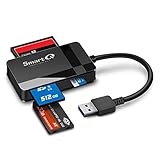
- 4. SmartQ C368 USB 3.0 Card Reader — Best budget pick
- 5. acer SD Card Reader USB C — Best for beginners
- 6. JOOPSHEE 5-in-1 Memory Card Reader — Best for heavy use
- How many slots does a multi slot memory card reader actually need?
- Cable, stick or dongle: which shape survives a field bag?
- What the listings leave out
- The verdict
- FAQ
The best multi slot memory card reader for bird watchers is the BENFEI Memory Card Reader, because it takes SD, microSD, Memory Stick and CompactFlash in one 2.82 oz body and switches between USB-C and USB-A without a second cable. If your laptop is USB-C only and you'd rather carry a detachable adapter than a dual-head plug, the RRSITIAU 4-in-1 is the better buy. Getting this wrong costs you a whole morning's cards sitting unread on the kitchen table while you hunt for the reader that fits.
Best multi slot memory card reader for bird watchers at a glance
| Pick | Slots | Connector | Price |
|---|---|---|---|
Best overall BENFEI Memory Card Reader |
4: SD, microSD, MS, CF | USB-C + USB-A, both fixed | Check Price |
| 4: SD, microSD, MS, CF | USB-C, with USB-A adapter | Check Price | |
Best premium clickfish 7 in 1 Card Reader |
7: 2×SD, 2×TF, CF, MS, XD | USB-C / USB 3.0 claim | Check Price |
Best budget pick SmartQ C368 USB 3.0 Card Reader |
4: SD, microSD, MS, CF | USB-A only | Check Price |
Best for beginners acer SD Card Reader USB C |
2: SD, microSD | USB-C | Check Price |
Best for heavy use JOOPSHEE 5-in-1 Memory Card Reader |
2 card slots + USB/charge ports | USB-C + USB-A | Check Price |




How I screened this field down to six readers
I started from the published specifications rather than the marketing, because that's the only part of a listing that can be compared straight down a column. Six readers survived. Here's what I actually looked at, in order.
- Slot count and card types. A reader that only handles SD is not a multi-slot reader in any useful sense. Four of the six take CompactFlash.
- Connector. USB-A only, USB-C only, or both. This is the field that most often makes a reader useless on arrival.
- Published physical figures. Weight and dimensions, where the listing gives them. Two of the six publish neither weight nor size in full.
- Warranty terms. Five of the six state a warranty. Four state one year, one states two years.
What got cut: single-slot dongles, readers with no published card-type list, and anything where the slot count in the title didn't match the slot list in the feature bullets.
Two things I could not screen on, and won't pretend otherwise. Real-world transfer speed, because every listing here quotes a bus ceiling rather than a measured rate. And durability, because no listing publishes a mating-cycle figure or an ingress rating.
Does a card reader care what you photograph?
Not directly, and it's worth saying plainly: none of these six listings mentions birding, wildlife, or field use as a designed-for application. The word "bird watchers" is your search term, not a specification anyone here publishes. So treat the modifier as your own filter rather than a claim any of these products makes.
What does carry over is the shape of a birding shoot. You come back with more frames than a portrait session and fewer keepers, often across two bodies with different card formats, and you want them off the cards before the next morning. That points at three things a listing can actually tell you.
- Slot count, because a second body means a second format.
- Connector coverage, because the machine you offload to at 5am may not be the one at your desk.
- Carried weight and size, because the reader rides in the same bag as a long lens.
Judge any multi slot memory card reader on those three published fields. The rest is atmosphere.
1. BENFEI Memory Card Reader — Best overall
Four card formats, two plug types and 2.82 oz total, which is the widest coverage per ounce in this set.
Best for: anyone running SD and CompactFlash bodies side by side Skip it if: you only ever use one SD card
What separates this one is that both connectors are part of the unit. BENFEI describes an integrated design covering SD, microSD, Memory Stick and CompactFlash, with USB-C and USB 3.0 on the same body. Nothing detaches, so nothing gets left behind. That matters more than it sounds when you're packing in the dark.
The company also claims all four slots read and write simultaneously, and quotes UHS-I transfer rates up to 160MB/sec with backward compatibility to USB 2.0 and 1.1. Treat both as manufacturer figures. The number I'd actually weigh is 2.82 oz, which is the published weight of a unit doing four formats.
Compatibility claims stretch across MacBook Pro, MacBook, iPad Pro, Surface Book 2, Samsung Galaxy phones and Dell XPS models, again per the listing.
The trade-off is that BENFEI publishes no dimensions and no warranty term, where the RRSITIAU and the SmartQ both state one year and the clickfish states two. Only one seller lists it, so you're buying a single supply line. And it sits third of six on price, which means two cheaper readers here cover the same four formats.
Pros:
- Four card formats in one body
- USB-C and USB-A both permanently attached
- 2.82 oz published weight
- Manufacturer claims all four slots work at once
Cons:
- No warranty term published
- No dimensions published
- Only one seller lists it
- Third of six on price despite no extra published slots
2. RRSITIAU SD Card Reader, 4 in 1 USB C to SD/TF/CF/MS Card — Runner-up
The same four formats as the winner, with a one-year warranty and a detachable USB-A adapter, at the second-cheapest position here.

Best for: USB-C laptop owners who want a swappable USB-A adapter Skip it if: you need a pocketable reader
This is the closest thing in the set to the BENFEI on card coverage. The listing names SD, SDHC, SDXC, Micro SD, Micro SDHC, Micro SDXC, CompactFlash, Memory Stick Pro Duo and RS MMC across four slots. That's the broadest named card list of any four-slot pick here.
The connector approach differs. RRSITIAU builds in USB-C and ships a detachable USB-C to USB-A adapter, so the reader is slim at the plug end but you have one more small part to keep track of. The company claims plug-and-play with no driver, and support for JPEG and RAW stills plus H.264 and MPEG-4 video.
Two published figures decide whether this suits you. The warranty is one year, which the winner does not state. The dimensions are 0.68 x 5.91 x 2.62 in, and that 5.91-inch length is the catch: this is a flat card-hub shape, not a stick. It's the second-longest body in this comparison.
Against the BENFEI you gain a stated warranty and a lower price position. You lose the fixed dual connector and any published weight.
Pros:
- Broadest named card list among the four-slot picks
- One-year warranty stated
- Second-cheapest of the six
- Detachable USB-A adapter included
Cons:
- 5.91 in long, so not pocket-sized
- Adapter can be misplaced separately
- No weight published
- Only one seller lists it
3. clickfish 7 in 1 Memory Stick Pro Duo Card Reader — Best premium
Seven slots and a two-year warranty, the only reader here that takes two SD cards at once or an XD card at all.

Best for: mixed-format archives with XD or two SD cards at once Skip it if: you want published weight and size figures before buying
The slot layout is the story. clickfish lists two SD slots, two TF slots, one CompactFlash, one Memory Stick and one XD, which makes this the only pick here that can hold a card from two SD bodies at the same time, and the only one that mentions XD at all. If you've got an older compact camera in a drawer, that last point may be the whole decision.
It also carries the longest warranty in this set at two years, double what the other four stating one manage. The listing describes a heat-resistant aluminium alloy casting with reinforced cables and a tin-plated pure copper core, and claims 5Gbps transfer with RAW and 4K video moving up to ten times faster than USB 2.0. That speed comparison is the manufacturer's, not a measurement.
Here's the trick with this pick: it publishes almost nothing physical. No weight, no dimensions, no colour. For a reader that lives in a camera bag, those are the fields I most want and can't get.
It's also the most expensive pick here, and it's the slowest seller of the six.
Pros:
- Seven slots, including XD and a second SD
- Two-year warranty, longest in this set
- Aluminium alloy casing claimed
- Only pick here taking two SD cards at once
Cons:
- No published weight or dimensions
- Most expensive pick in the comparison
- Slowest seller of the six
- Only one seller lists it
4. SmartQ C368 USB 3.0 Card Reader — Best budget pick
The cheapest of the six and the lightest four-slot reader here at 1.12 oz, with an LED that tells you it's awake.

Best for: a spare reader that lives in the glovebox Skip it if: your laptop has only USB-C ports
This one wins on weight and price together. At 1.12 oz it is the lightest pick in the set, and at 0.6 x 2.78 x 1.67 in it's genuinely small enough to forget in a jacket pocket. It's also the cheapest of the six while still covering four card types: microSD, SD, Memory Stick and CompactFlash.
SmartQ says each slot reads data independently and calls out plug-and-play mobile use during travel, with compatibility across Windows, macOS and Linux and no driver needed. There's a blue LED that lights when powered, which is a small thing that saves you guessing whether a dead port or a dead card is the problem. The box includes a cable organiser and a manual.
The listing quotes 5GB per second, which is a garbled version of the 5Gbps USB 3.0 bus figure. Read it as USB 3.0, nothing more.
The real limitation is the connector: USB-A only. On a recent thin laptop that means a hub or a dongle, and the whole point of a compact reader evaporates. The warranty is one year.
Pros:
- Cheapest of the six
- Lightest pick at 1.12 oz
- Smallest published footprint, 0.6 x 2.78 x 1.67 in
- Power LED and one-year warranty
Cons:
- USB-A only, no USB-C connector
- Speed claim in the listing is misstated
- No CompactFlash advantage over cheaper rivals
- Only one seller lists it
5. acer SD Card Reader USB C — Best for beginners
Two slots, 15 g, and the smallest body here, which is the right answer if every card you own is SD or microSD.

Best for: SD and microSD only, carried in a jacket pocket Skip it if: you own a CompactFlash body
Fewer slots, done small. This is a dual-slot USB-C reader at 15 g and 0.39 x 2.8 x 0.67 in, which makes it both the lightest and the shortest unit in this comparison. If your kit is one SD camera plus a drone or an action camera on microSD, the four extra slots on the winner are dead weight you carry every day.
Acer claims simultaneous dual-card reading and writing on microSD and SD, plug-and-play with no driver install, and 5Gbps over USB 3.0. The listing pitches it as fitting a camera bag or laptop sleeve, and the published dimensions back that up better than most claims here. Compatibility covers PCs, laptops, cameras, phones and tablets with USB-C or USB-A ports, per the listing, and there's a one-year manufacturer warranty.
Skip it if there's any CompactFlash in your future. Older pro bodies still use it, and this reader has no path to it. It also sits fourth of six on price, above two four-slot readers, so you're paying a small premium for the compact shape rather than for capability. That's a defensible trade, just be clear it's the trade you're making.
Pros:
- Lightest published weight in the set at 15 g
- Smallest footprint, 0.39 x 2.8 x 0.67 in
- One-year manufacturer warranty
- Simultaneous SD and microSD claimed
Cons:
- Two slots only, no CompactFlash or Memory Stick
- Priced above two four-slot readers here
- No XD support
- Only one seller lists it
6. JOOPSHEE 5-in-1 Memory Card Reader — Best for heavy use
The only pick here with a charging port, built for offloading straight to a phone or tablet rather than a laptop.

Best for: offloading to a phone or tablet in the car Skip it if: you shoot CompactFlash or want a compact reader
This is a hub with card slots rather than a card reader with extras. JOOPSHEE lists SD and microSD slots supporting SD, SDHC, SDXC and MMC, plus USB ports for peripherals and, unusually, a charging port for phones and tablets. It's the only pick in this comparison with power pass-through, which is what makes a long card dump on a phone survive to the end.
The company also claims two-way transfer, reading multiple cards at once, and connection to cameras, TVs and flash drives. Compatibility is stated for iOS 9 and later. The model is listed as 1032Pro with a 2026 release date and a one-year manufacturer warranty.
Two hard limits. There's no CompactFlash slot, so a CF body rules this out completely. And at 0.4 x 5.6 x 2.7 in it's the second-longest body here, a flat panel rather than something that clips onto a keyring.
It's the second-most-expensive pick, and the extra money buys ports rather than card formats. If you offload to a laptop, the BENFEI covers more cards for less.
Pros:
- Only pick here with a charging port
- Extra USB ports for peripherals
- One-year manufacturer warranty
- iOS device support stated
Cons:
- No CompactFlash slot
- 5.6 in long, bulky for a bag
- Second-most-expensive pick in the set
- Only two card slots despite the 5-in-1 name
How many slots does a multi slot memory card reader actually need?
Most guides count slots and stop. Slot count is the easy number, and it's the wrong one to optimise. What decides this purchase is whether the slots you get match the cards you own, and whether the plug matches the machine you offload to.
Work it out in two steps. Write down every card format in your kit right now, including the drone and the trail camera. Then write down the port on the laptop you'll use at 5am, half asleep.
- One SD format only? Two slots is plenty. The acer covers it at 15 g.
- SD plus microSD plus CompactFlash? You need four, which is the BENFEI, the RRSITIAU or the SmartQ.
- Two SD cards to copy at once, or an XD card? Only the clickfish, with its seven slots, does that here.
- Offloading to a phone rather than a laptop? The JOOPSHEE is the one with a charging port.
Paying for seven slots when you own two formats buys you nothing but bulk. Buying two slots when you own three formats costs you a second reader.
Cable, stick or dongle: which shape survives a field bag?
Shape is the field most buyers skip and most regret. Three shapes are represented here, and the published dimensions separate them cleanly.
Compact stick. The SmartQ at 0.6 x 2.78 x 1.67 in and the acer at 0.39 x 2.8 x 0.67 in both fit a pocket. Small readers get lost, but they never get left behind for being awkward.
Flat panel hub. The RRSITIAU at 5.91 in long and the JOOPSHEE at 5.6 in are both nearly six inches of body. That's fine on a desk and awkward in a bag already holding a long lens.
Unpublished. The BENFEI publishes 2.82 oz but no dimensions. The clickfish publishes neither. You're ordering shape blind on both.
There's a second variable worth naming: how the plug attaches. The BENFEI carries USB-C and USB-A on the unit itself. The RRSITIAU uses a detachable USB-A adapter, and a detachable part is a part you can lose in a car boot at dawn. Neither approach is wrong. Fixed is fewer pieces, detachable is a slimmer body. Decide which failure you'd rather have.
What the listings leave out
Four things nobody here publishes, and you should assume the worst on each until proven otherwise.
Measured transfer speed. Every speed figure in these six listings is a bus ceiling. 5Gbps is what USB 3.0 can carry, not what a UHS-I card delivers. The BENFEI's 160MB/sec UHS-I claim is the most specific number in the set, and it's still the card's limit rather than the reader's throughput.
Simultaneous slot behaviour. BENFEI, acer and JOOPSHEE all claim multiple cards work at once. What none of them says is whether bandwidth is shared. Two cards at half speed each is still two cards at once, technically.
Durability. No mating-cycle count, no drop rating, no moisture rating on any of the six. If your reader lives in a damp bag, the warranty term is your only real protection: two years on the clickfish, one year on four others, none stated on the BENFEI.
Supply depth. Every one of these six is listed by a single seller. That's not a defect, but it does mean a replacement is not guaranteed to be the same model in two years.
The verdict
The BENFEI Memory Card Reader is the pick I'd default to. Four card formats, both plug types permanently attached, 2.82 oz on the scale, and nothing to detach or misplace. For a bag that already carries too much, one part that does four jobs beats two parts that do five.
Two conditions flip it. First, if a stated warranty matters more to you than a fixed dual connector, take the RRSITIAU 4-in-1: same four formats, a wider named card list, one year of cover, and second-cheapest here. The 5.91-inch body is the price of that. Second, if you own an XD card or need two SD cards read in one pass, only the clickfish 7-in-1 does it, and its two-year warranty is the longest in this comparison.
The runner-up's exact advantage over the winner is documentation. RRSITIAU publishes the warranty and the full dimensions; BENFEI publishes neither. If you order sight-unseen and want to know what arrives, that's not a small thing.
One last cut. Anyone whose entire kit is SD and microSD should stop reading and buy the acer at 15 g. Four slots you never use is just weight.
FAQ
Is a multi slot memory card reader worth it over a single-slot dongle?
A multi slot memory card reader is worth it the moment you own two card formats, which happens as soon as you add a drone or an action camera to an SD body. The BENFEI covers four formats at 2.82 oz, which is less than carrying two separate readers. If every card in your bag is SD, a dual-slot unit like the acer at 15 g is enough.
Which offers better value, the SmartQ C368 or the acer dual-slot reader?
Better value between the SmartQ C368 and the acer depends entirely on your ports. The SmartQ is the cheapest of the six and covers four card formats including CompactFlash, but it's USB-A only. The acer costs more and drops to two slots, yet gives you USB-C and the smallest body here at 0.39 x 2.8 x 0.67 in. Match the plug to your laptop first.
Will these readers work with CompactFlash cards from an older camera body?
CompactFlash cards work with four of the six picks here: the BENFEI, the RRSITIAU, the SmartQ C368 and the clickfish 7-in-1. The acer dual-slot and the JOOPSHEE 5-in-1 handle SD and microSD only, so an older CF body rules both out. The clickfish is the only pick that adds XD support alongside CompactFlash.
How does the BENFEI compare to the clickfish 7 in 1 reader?
The BENFEI compares favourably on carrying weight and price position, publishing 2.82 oz and sitting third of six on cost with four card formats. The clickfish wins on slots, offering seven including XD and a second SD, plus a two-year warranty against the BENFEI's unstated term. But clickfish publishes no weight or dimensions at all, so bag fit is a gamble.
What mistake do buyers make when choosing a multi slot memory card reader?
The common mistake when choosing a multi slot memory card reader is counting slots and ignoring the connector. A four-slot USB-A reader is useless on a USB-C-only laptop without a hub, which defeats the point. Check your machine's port first, then your card formats, then the published length. The JOOPSHEE runs 5.6 in long, which surprises people.
Start with the cards, not the reader. Empty your bag, list every format you actually shoot, then buy the smallest reader that covers all of them and plugs directly into the machine you offload to. For most people reading this, that lands on the BENFEI, because two bodies with different cards is the normal state of a birding kit rather than the exception. The 2.82 oz body with both plug types attached means one reader handles the whole bag with nothing to lose in the dark, and that reliability is worth more at 5am than any transfer-speed figure on the box.