Best Lightweight Action Camera for Travel and POV
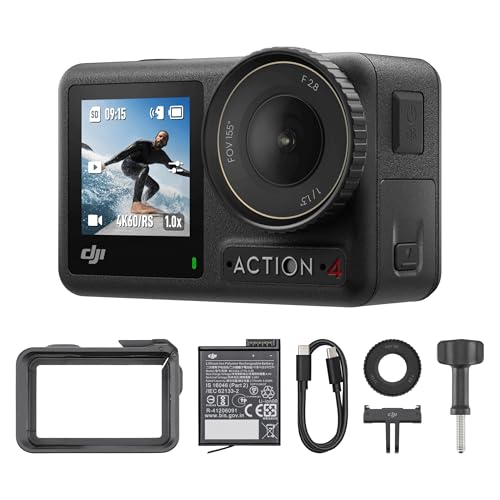
Five action cameras compared on weight, sensor size and battery figures. DJI's Osmo Action 4 leads, but three other picks win on price, warranty or wearability.

By Sam BaileyUpdated 14 min read
On this page
- Best lightweight action camera at a glance
- How I narrowed the field to five
- What decides a lightweight action camera?
- 1. DJI Osmo Action 4 Essential Combo — Best overall
- 2. DJI Osmo Action 5 Pro Essential Combo — Best premium
- 3. AKASO EK7000 — Most versatile
- 4. AKASO Brave 4 — Best budget pick
- 5. Aidzhi 4K Waterproof Mini Action Camera — Best warranty
- Weight, size and where the ounces actually go
- How lightweight is lightweight, really?
- Osmo Action 4 vs Osmo Action 5 Pro: which wins?
- What the listings do not tell you
- The verdict
- FAQ
The best lightweight action camera in this set is the DJI Osmo Action 4 Essential Combo, a 5.11 oz body with a 1/1.3-inch sensor and a listed 150-minute battery. It leads on the specifications that matter for travel: sensor size, cold-weather rating and weight, all in one small housing. Step up to the DJI Osmo Action 5 Pro Essential Combo if you shoot long sessions and want the manufacturer's claimed four-hour runtime. Step down to the AKASO EK7000 if 2 oz and entry pricing matter more than sensor quality.
Best lightweight action camera at a glance
| Pick | Weight | Sensor / stabilisation | Price |
|---|---|---|---|
Best overall DJI Osmo Action 4 Essential Combo |
5.11 oz | 1/1.3" sensor, 4K/120 claim | Check Price |
Best premium DJI Osmo Action 5 Pro Essential Combo |
5.15 oz | 1/1.3" sensor, 360° HorizonSteady claim | Check Price |
Most versatile AKASO EK7000 |
2 oz | EIS claim, 4K/30 | Check Price |
Best budget pick AKASO Brave 4 |
5.61 oz | 170° angle claim, 4K/30 | Check Price |
Best warranty Aidzhi 4K Mini |
not listed | EIS 2.0 claim, 4K/30 | Check Price |


How I narrowed the field to five
I started with a longer shortlist of sports and action cameras across the entry, mid and premium tiers, then cut anything without a published weight, a stated 4K mode, or a warranty position I could read off the listing. Five cameras cleared the bar. Two are from DJI, two from AKASO, one from Aidzhi.
The criteria, weighted:
- Weight and dimensions, because that is the whole point of a lightweight action camera. A 5 oz body is a jacket-pocket camera; a 2 oz body clips onto a cap peak without pulling it down.
- Sensor size and stabilisation claims, because footage that looks bad in the shade is not worth carrying, and shaky footage is not worth watching.
- Battery figures the manufacturer publishes, because two batteries at 90 minutes each is a very different day out from one battery at 150 minutes.
- Warranty and included accessories, because the entry tier competes hard on what is in the box.
The keyword modifier here is "lightweight". Only three of the five cameras publish a weight figure, and one of them, the Aidzhi GO9, does not. That is a real gap in the comparison, and I flag it rather than paper over it.
What decides a lightweight action camera?
Most guides in this category compare 4K frame rates. That is not what decides it. All five cameras here list 4K recording. What splits them is sensor size, and the DJI cameras publish a 1/1.3-inch figure the AKASO and Aidzhi listings do not match.
A larger sensor is what buys you cleaner low-light footage, better dynamic range on a bright day, and colour that holds together when the light gets weird at sunset. On paper, 4K on a small sensor and 4K on a big sensor produce the same number of pixels. In practice, they do not produce the same image.
The deciding specification is therefore sensor size first, weight second, published battery runtime third. Frame rate matters, but only after those three. Buy on frame rate alone and you end up with a lot of 4K footage that looks worse than 1080p from a phone.
1. DJI Osmo Action 4 Essential Combo — Best overall
The Osmo Action 4 is the lightweight action camera to beat because it pairs a 5.11 oz body with the largest published sensor in this set.
Best for: travellers who want low-light quality without the weight of a mirrorless kit Skip it if: you need the longest possible battery runtime in a single session
At 5.11 oz and 2.78 x 1.74 x 1.29 in, the Action 4 sits in the middle of this set for size but at the top for what it does with that space. DJI says the 1/1.3-inch sensor uses 2.4μm pixels for cleaner low-light footage, and that the 1770 mAh battery lasts up to 150 minutes and works down to -20°C. The listing also claims 4K at 120fps with a 155° field of view, and 10-bit colour with a D-Log M profile for editing headroom.
Against the rest of this set, the Action 4 is the only pick under 6 oz that also carries a 1/1.3-inch sensor claim and the -20°C rating. The AKASO cameras are lighter or cheaper, but neither publishes a sensor size. The trade-off is real: this is the fourth most expensive pick of the five, and the battery figure trails the newer Action 5 Pro's four-hour claim by a wide margin.
Pros:
- 5.11 oz body with 1/1.3-inch sensor claim
- Cold-weather rating down to -20°C per DJI
- 4K/120 and 10-bit D-Log M claim from DJI
- Magnetic quick-release mount
- 2024 release, current-generation feature set
Cons:
- Premium price position in this set
- Battery runtime trails the Action 5 Pro claim
- Only one seller lists this configuration
2. DJI Osmo Action 5 Pro Essential Combo — Best premium
The Action 5 Pro is the pick when battery runtime and stabilisation matter more than saving weight or money.

Best for: creators who film long, stabilised sequences and edit seriously afterwards Skip it if: you rarely shoot more than a few minutes at a time
The 2025 Action 5 Pro weighs 5.15 oz, a difference of 0.04 oz from the Action 4. You will not feel that in your hand. What you will feel is the battery: DJI claims up to 4 hours of recording from the 1950 mAh cell, and 3.6 hours at -20°C. That is the largest published runtime claim in this comparison.
DJI also lists a 4nm chip for subject tracking, 360° HorizonSteady stabilisation, and dual OLED touchscreens front and rear. It is the same 1/1.3-inch sensor claim as the Action 4, so image quality is a step-sideways rather than a step-up on paper. The reason to pay more is the runtime, the stabilisation claim, and the front screen for framing yourself.
The trade-off is that this is the most expensive pick here and the slowest seller of the DJI pair. If you shoot short clips, you are paying for headroom you will not use. If you shoot long, uncut sequences on a bike or a board, the runtime claim is what pays it back.
Pros:
- 1950 mAh battery, up to 4 hours claimed by DJI
- 360° HorizonSteady stabilisation claim
- Dual OLED touchscreens for front-and-rear framing
- 1/1.3-inch sensor, same as the Action 4
- 2025 release, the newest camera in this set
Cons:
- Most expensive pick in this comparison
- Only 0.04 oz difference from the cheaper Action 4
- Only one seller lists this configuration
3. AKASO EK7000 — Most versatile
The EK7000 is the lightest camera here at 2 oz, and the pick if pocketability trumps everything else.

Best for: first-time buyers who want the smallest, lightest body on this list Skip it if: you need modern low-light performance or long battery life
At 2 oz and 1.5 x 0.9 x 2 in, the EK7000 is the smallest and lightest camera in this comparison by a wide margin. The next-lightest, the Action 4, is more than twice its weight. If your requirement is a camera you genuinely forget you are carrying, this is the one.
AKASO lists 4K at 30fps, 20 MP photos, built-in Wi-Fi and EIS stabilisation. The housing is rated to 131 ft in its case, and the box includes a 2.4 GHz wrist remote. Warranty is 1 year from the manufacturer, in line with the Brave 4 and the Aidzhi.
The trade-offs are what the low weight and entry price do not include. There is no published sensor size on the listing, no cold-weather rating, and no 10-bit colour claim. The camera is from 2018, older than any other pick here. For daylight surf, snowboarding on a bright day, or handing to a child on holiday, that is fine. For indoor vlogging or evening shots, it is the wrong tool.
Pros:
- 2 oz body, lightest pick in this set
- 4K/30 recording and 20 MP photos per listing
- Wrist remote included
- 131 ft waterproof case
- 1-year manufacturer warranty
Cons:
- No published sensor size
- 2018 release, the oldest camera here
- No cold-weather rating on the listing
4. AKASO Brave 4 — Best budget pick
The Brave 4 is the cheapest of the five and the only pick that ships with two batteries in the box.

Best for: swimmers and snorkellers who want two batteries in the box Skip it if: you plan to shoot mostly indoors or at night
The Brave 4 weighs 5.61 oz, the heaviest pick with a published weight, and measures 1.57 x 0.91 x 2.32 in. AKASO lists 4K at 30fps, 20 MP photos, a 170° adjustable field of view with three narrower options, and image stabilisation. The waterproof case is rated to 131 ft, and the kit includes a USB dual charger and two 1050 mAh batteries the listing says record for up to 90 minutes each.
That two-battery kit is the reason to consider it. If you are diving, snorkelling, or spending a day at the beach, a hot-swap on the sand beats a single cell you cannot recharge until you get back to the car.
The trade-off is the same as the EK7000 and then some. No published sensor size, no cold-weather rating, no premium colour profile. It is the cheapest pick here, the second-slowest seller of the five, and the runtime per battery is short by modern standards. Buy it for the case and the second battery, not for image quality.
Pros:
- Cheapest pick in this comparison
- Two 1050 mAh batteries included
- 131 ft waterproof case
- 170° field of view claim, with three narrower options
- 1-year manufacturer warranty
Cons:
- Heaviest pick with a published weight, at 5.61 oz
- No published sensor size
- 90-minute claim per battery is short
5. Aidzhi 4K Waterproof Mini Action Camera — Best warranty
The Aidzhi GO9 is the wearable, magnetic pick and the one to consider if a body-cam form factor suits you.

Best for: vloggers who want a wearable, magnetic body cam with storage built in Skip it if: you want a screen on the camera itself
The Aidzhi GO9 is the outlier in this set: a thumb-sized magnetic camera the listing describes as a POV and body cam rather than a handheld action camera. Aidzhi lists 4K at 30fps with EIS 2.0 stabilisation, IPX8 waterproofing to 33 ft, 64 GB of built-in storage, and up to 350 minutes of battery life. Warranty is 1 year from the manufacturer, matching the AKASO pair.
Its position in this comparison is niche. The listing does not publish a weight figure or a sensor size, so the "lightweight" claim rests on the magnetic wearable design rather than a number I can quote back to you. The mid-tier price sits above the two AKASO cameras and below the DJIs, and it is the slowest seller of the five.
Choose it if you want hands-free recording clipped to a lanyard or a strap, and if the built-in storage matters because you do not want to carry a microSD card. Skip it if you are used to framing shots on a rear screen, because that is not the form factor.
Pros:
- Magnetic wearable design for hands-free use
- 64 GB storage built in
- 350-minute battery claim
- EIS 2.0 stabilisation claim
- IPX8 rating to 33 ft
Cons:
- No published weight on the listing
- No rear framing screen
- Slowest seller of the five
Weight, size and where the ounces actually go
Weight is not evenly distributed across this list. The published figures:
- AKASO EK7000: 2 oz
- DJI Osmo Action 4: 5.11 oz
- DJI Osmo Action 5 Pro: 5.15 oz
- AKASO Brave 4: 5.61 oz
- Aidzhi GO9: not listed
The gap that matters is between the EK7000 at 2 oz and everything else in the 5 oz range. Once a camera crosses 5 oz, it feels like a camera in your hand, and it pulls slightly on a cap mount or a chest strap. Under 3 oz, it does not. That is the practical threshold.
The DJI pair are within 0.04 oz of each other, which is inside the margin of a fingerprint. If you are choosing between them on weight, do not: choose on battery runtime, stabilisation, and whether you want the front screen.
How lightweight is lightweight, really?
The keyword promises "lightweight", and only three of these five cameras publish a weight figure. That is worth naming out loud. Amazon's search returned five cameras when I asked for lightweight ones, and two of them do not tell you how much they weigh.
Here is the practical read. If lightweight is the reason you are shopping, only buy from a listing that publishes the number. The EK7000 at 2 oz is a genuinely small camera. The two DJI bodies at just over 5 oz are light for what they contain but not by action-camera standards overall. The Brave 4 at 5.61 oz is not what most people mean when they say lightweight. The Aidzhi is a wearable, so it is probably small, but "probably" is not a specification.
A rear-screen action camera under 3 oz with a modern sensor does not appear in this set. If you find one elsewhere, that is where to look next.
Osmo Action 4 vs Osmo Action 5 Pro: which wins?
For most people, the Action 4 wins. Same sensor size, same weight class, lower price position, and a battery claim of 150 minutes that most day trips do not exceed. You are paying for the newer chip, the four-hour battery claim, and the front OLED screen when you step up to the Action 5 Pro.
The 5 Pro is the right buy in three specific cases:
- You film uninterrupted sequences longer than 90 minutes and hate swapping batteries mid-run.
- You film yourself and want the front screen for framing your face.
- You film on motorbikes, bikes or boards where 360° HorizonSteady, as DJI names it, earns its keep.
Outside those three, the Action 4 is the smarter buy. The 0.04 oz weight difference is not a reason on its own.
What the listings do not tell you
Three things worth knowing before you click:
- Microphone quality is rarely quoted. All five listings mention audio, and two mention external microphone support, but nobody gives you a spec. Assume the built-in mic on any action camera is adequate outdoors and poor indoors, and plan around it.
- Waterproof depth is often the case, not the camera. The AKASO pair reach 131 ft in a housing, not naked. The Aidzhi lists IPX8 to 33 ft without a case. The DJI bodies do not have a headline depth figure on these Essential Combo listings. Check the exact wording before you take one snorkelling.
- Mounts are not always included. The Essential Combo packaging on the DJI cameras includes some accessories, and the AKASO Brave 4 lists a dual charger and two batteries. Confirm the mount you need is in the box, or budget for a separate mount kit.
The verdict
The DJI Osmo Action 4 Essential Combo is the best lightweight action camera in this comparison. A 5.11 oz body, a published 1/1.3-inch sensor, a -20°C cold rating and a 150-minute battery claim add up to the most complete package here for travel and general use. It is not the lightest and it is not the cheapest, but it is the one that gets the trade-offs right.
Two conditions flip the recommendation. If you shoot long, unbroken sequences and want the four-hour battery claim and 360° HorizonSteady, the DJI Osmo Action 5 Pro Essential Combo is worth the extra outlay for 0.04 oz more weight. If your budget is tight and pocketability outweighs image quality, the AKASO EK7000 at 2 oz is the lightest camera on the list and the easiest to carry every day.
The AKASO Brave 4 wins on price and on ships-with-two-batteries. The Aidzhi GO9 wins if you want a wearable body cam rather than a handheld action camera. Neither is the default choice for most buyers, but each is the right choice for a specific one.
FAQ
Is the best lightweight action camera worth the DJI premium?
Is the best lightweight action camera worth paying DJI money for? For most travellers, yes. The Osmo Action 4 publishes a 1/1.3-inch sensor, a -20°C cold rating and a 150-minute battery claim that the AKASO and Aidzhi listings do not match. If you shoot in mixed light or cold weather, that gap is what your money buys. If you only shoot in daylight, the AKASO EK7000 covers the basics for less.
What is the lightest camera in this comparison?
The lightest camera in this comparison is the AKASO EK7000 at 2 oz, measuring 1.5 x 0.9 x 2 in. The two DJI bodies sit at 5.11 oz and 5.15 oz, and the AKASO Brave 4 at 5.61 oz. The Aidzhi GO9 does not publish a weight. If a pocket-friendly body is the whole reason you are shopping, the EK7000 is more than twice as light as the next pick.
How long does an action camera battery actually last?
How long does an action camera battery last on paper? The listings here range widely. AKASO says each Brave 4 battery records for up to 90 minutes and ships two in the box. DJI says the Action 4 runs up to 150 minutes and the Action 5 Pro up to 4 hours. Aidzhi claims 350 minutes on the GO9. Real runtimes drop with 4K, cold weather and screen use, so treat these as ceilings.
Osmo Action 4 or AKASO EK7000 for a first buyer?
Osmo Action 4 or AKASO EK7000 depends on what you want to protect. Pick the Action 4 if image quality, low-light performance and the 1/1.3-inch sensor claim matter more than saving money and ounces. Pick the EK7000 if you want the lightest body here at 2 oz, a simple 4K/30 feature set, a wrist remote and a lower entry price. Both carry a 1-year warranty position on their listings.
What should I avoid when buying a lightweight action camera?
Avoid buying on 4K frame rate alone. Every camera in this comparison lists 4K, and the resulting footage looks very different depending on sensor size, which most entry listings do not publish. Also avoid assuming the waterproof depth is the naked camera: the AKASO cameras reach 131 ft only inside their case. Read the weight, sensor and waterproofing wording carefully, and do not treat missing figures as favourable ones.
If you want the safest default, buy the DJI Osmo Action 4 Essential Combo, take it out of the box, charge the battery, mount it once, and go shoot. It is the pick with the fewest compromises in this set: a 5.11 oz body, a published 1/1.3-inch sensor, a cold-weather rating that reaches -20°C, and a 150-minute battery figure that covers a normal day out. If you already know you shoot for hours at a time, skip up to the Action 5 Pro for the four-hour claim and the front screen. If you already know your budget is fixed, drop down to the AKASO EK7000 for 2 oz of pocket-friendly 4K. The best lightweight action camera is the one you will actually carry, and this shortlist gives you three honest ways to choose it.